
Curtains Installation and Maintenance Reference Guide 2024
August 16, 2024
by Karen Chan
Dear readers, if you are exploring the various types of current curtains designs and weighing some pros and cons for installation, maintenance and cost savings either for home or commercial use, it might be worthwhile to take a look at the comparison table below. After some 20 years in the industry, these are some factors that you may wish to consider in your decision making process.
We are not analyzing fabrics types in this article, so cost savings which may arise from various fabric use is not discussed here. Note: Pictures of the various designs of curtains are appended at the end of the article for reference.

Sensuous / Collection
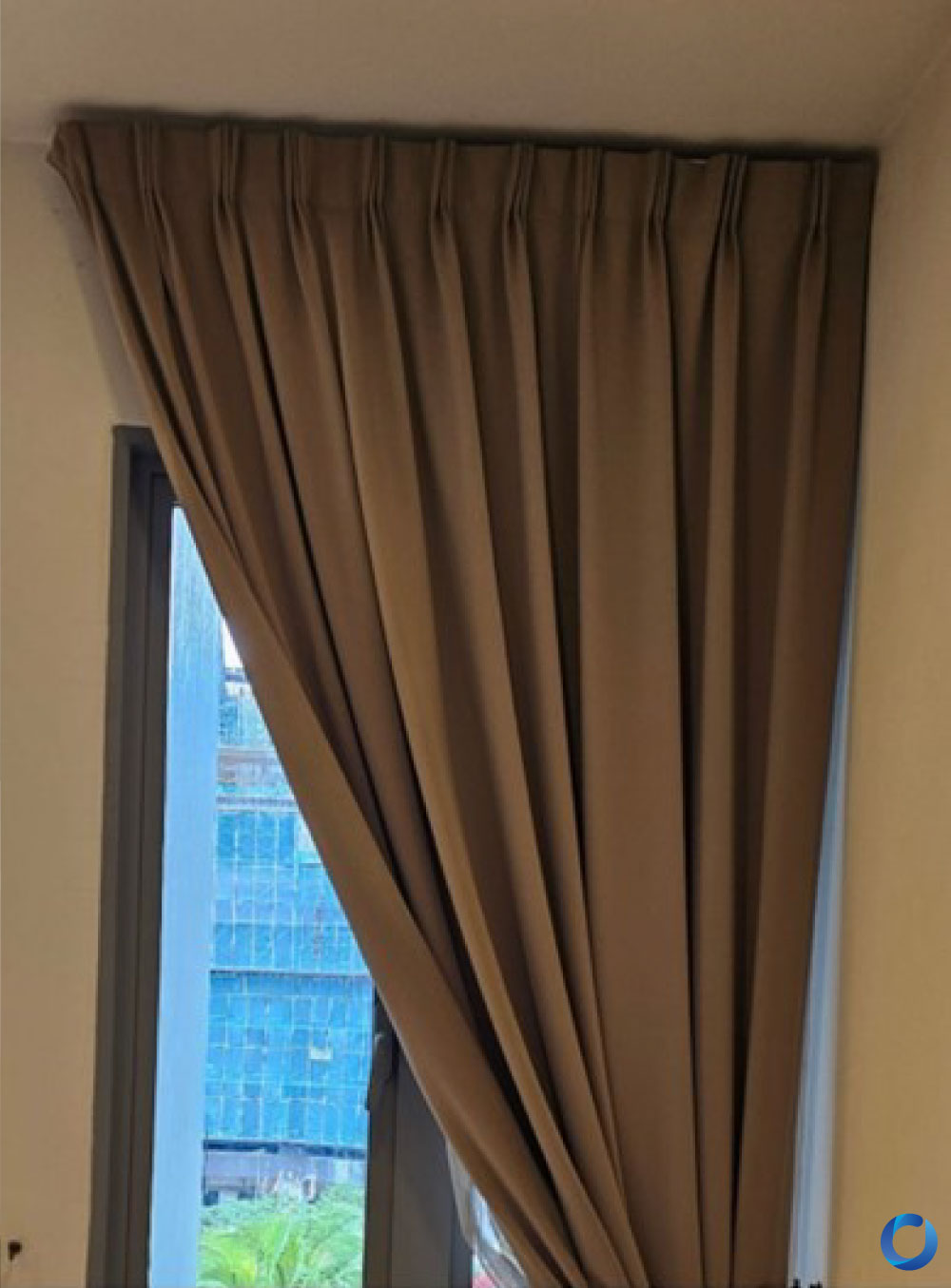
FRENCH PLEATED DIM OUT (NIGHT CURTAINS) HUNG ON A TRACK THAT WAS INSTALLED TO THE CEILING. THE CURTAINS ARE USING WALL HOOKS THAT ARE ABLE TO COVER THE TRACKS LEAVING NO LIGHT GAPS. (HOOK 101). ADDING A RETURN WRAP ON THE OPEN LEFT OF THE DOUBLE TRACK NEATENS AND COVERS ANY LIGHT GAPS ON THE EXPOSED SIDE.

DOUBLE PLEATS (SINGAPORE PLEATS) HUNG AS A SAMPLE ON A ROD USING SINGLE PRONG CEILING HOOK
| Metal track installation (very similar to French Pleat requirements):
This is particularly important for motorized installations that ensure silent, smooth and secure movement of the curtains. | Pros:
Cons:
Solution:
|
| Installation of this curtain on Metal and wooden rods are similar to the French Pleat curtain requirements. | The pros and cons of the double pleat curtains are similar as above. |
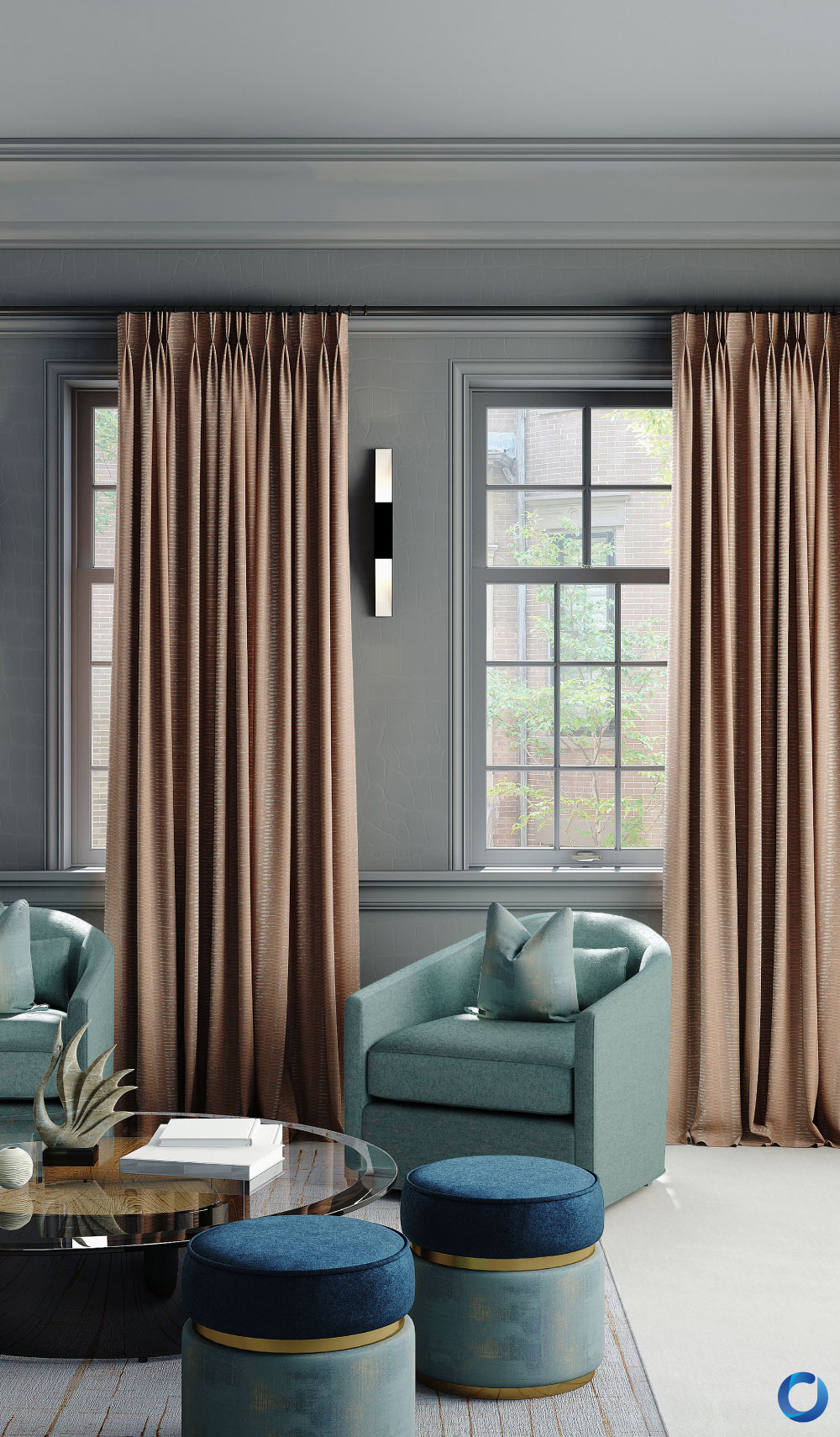
Marmont / Collection
| Installation of this curtain on metal tracks. Considerations:
| Pros:
Cons:
|
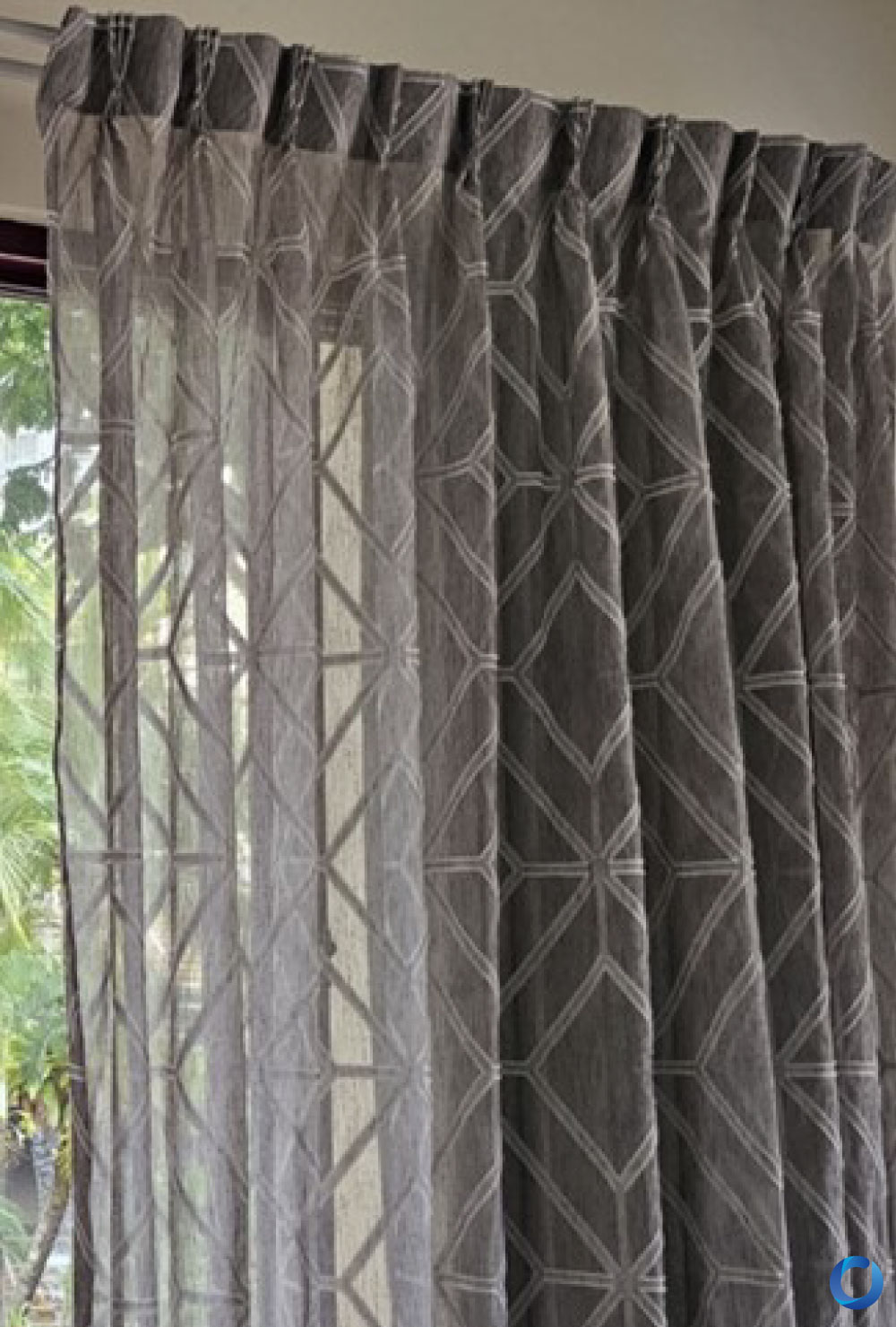
TRIPLE PLEATS (DAY CURTAINS) HUNG ON A TRACK ON FACE OF THE WALL
| Installation of this type of curtain will need to utilize rod diameters of 32mm – 35mm to be able to bear the weight.
| Pros:
Cons:
Solution:
|

Innovation / Collection
| Installation on a Metal and wooden Rod.
Note: This design can only utilize rods and cannot use tracks. | Pros:
|

Melangerie / Collection
| Installation is only on a wave pleat track and cannot be used on a rod. Unless the particular rod has a special track underneath that supplies the hidden track in its rod frame.
The wave pleat utilizes a tape with slotted and measured distance between each button that is used to attach the wave pleats at alternative “wave” spacing. Some elegant tracks for wave pleats will have “hidden” tapes or strings that do not expose the runner strings. These also negate the possibility of knotted tracks.
Currently, there are two types of wave pleat installations which is the button type that snaps onto the track runners, and another type which uses single hooks to hook onto the track runners. The latter is presently the more expensive option from Toso Japan.
The installation of the track can be done on the face of the wall or within a recessed pelmet.
The challenge of the recessed pelmet is to have sufficient gap space of ideally 12-14 inches as each wave pleat takes up around 4.5 inches of space per return of a full wave and next. Leaving a gap of around 0.5 inches between 2 layers of pleats and one inch between the recessed pelmet walls, the minimum gap allowance to install the double wave pleat curtains will then work out to a minimum of 12 inches. This will need to be wider if fabrics such as heavy velvets are used.
There are, of course, various track strengths you can order from curtain specialists who will ensure that your project will be properly executed with the right support accessories.
| Pros:
Cons:
|

Vital / Collection
| Installation is on the metal or wooden rods only. The difference of the tab and back tab is just the top gap given to the header. For the Tab, you will see gaps at the top, whereas for Back tab, you don’t see any gaps.
For the Tab type of curtains, the installation of the rod needs to be much higher than the top of the door frame, otherwise, the light gap from the tab will give unsightly exposure from the top of the door frame.
If the gap between the door frame and the rod is small, it is best to go for Back tab design if you are a fan of this type of curtain. | Pros:
Cons:
|
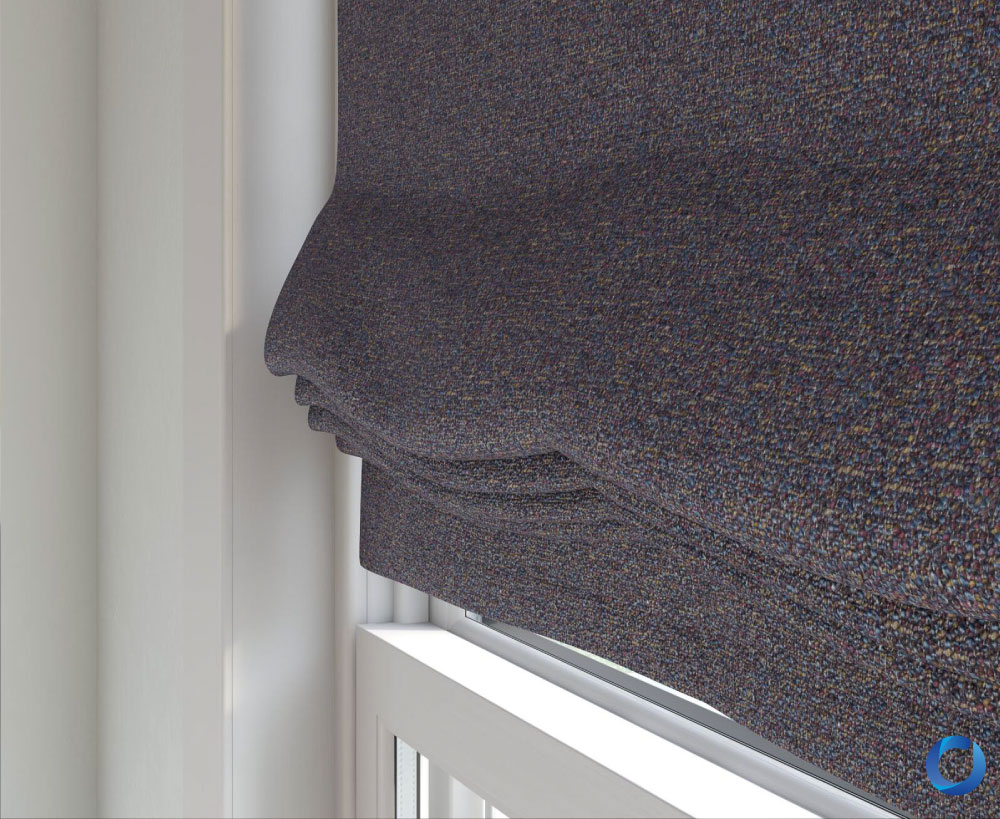
Alaska / Collection
| This is a type of flat curtain and if you fall in love with a roman blind, you will need to know how to manage and handle it. There are many systems that help make the handling and maintenance less challenging. Roman blinds look best with a reasonably good blackout lining with good fold qualities. It is important to choose fabrics that can fold neatly in a stack. Together with impeccable sewing skill, the roman blind is a beautiful and functional piece of art.
The roman blind has a Japanese style stack or a staggered stack. The Japanese style type reveals the windows more so the stacks all stay at the top as part of the décor. Less top header spacing is required.
The raised staggered stack roman blind covers the windows more and hence, if you need to have more view of the outdoors, the staggered design needs to be installed much higher to accommodate the stacked folds.
Both roman blinds have options to have a pelmet box to give a more tailored look to the blind. The pelmet box will normally have matching fabric to be used with the roman blind.
Roman blinds also have double layer system. The Toso® double Creaty® Roman blind allows the back layer as a sheers blind and the front as the blackout or block out piece.
Toso® is the world’s leading accessories for curtains tracks and blinds and I usually refer to this brand for a reputable and dependable accessory. | Pros:
Cons:
|
Article Suggestion :
- Latest Curtain Designs 2023 | Langsir Moden Terkini 2023
- Latest Curtain Design 2024
- The Ultimate Guide to Curtain Styles in 2024
- Eco-Friendly Curtain Materials: A 2024 Perspective
- 2024 Trends in Curtain Designs: What's New?
- Latest Curtain Designs 2022
- European Contemporary Curtain Designs 2024
Looking for quality sofas with creative fabrics and easy maintenance? Find the nearest showroom at acaciasofa.co
If you are searching for the perfect curtain to express your personality at home, find our nearest boutiques at acaciacurtain.co