Do Sound Absorbing Fabrics Really Work? Lab-Tested Results
July 27, 2026
by Karen Chan & JW
The Role of Fabrics in Creating Better Acoustic Spaces
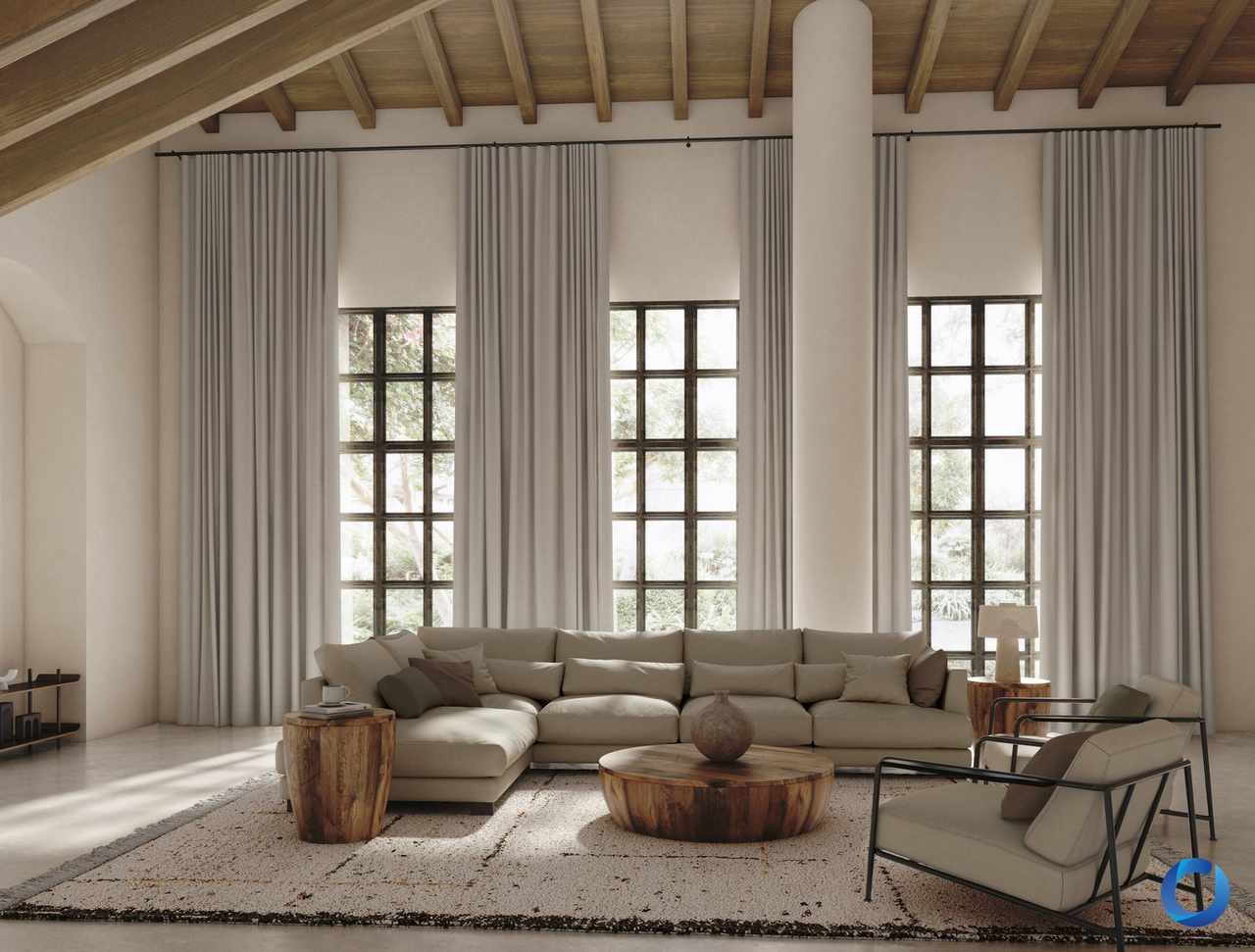
Altura / Collection
Introduction
As modern buildings increasingly feature hard surfaces such as glass, marble, stone, concrete, and timber laminates, acoustic comfort has become an important consideration in both residential and commercial interiors.
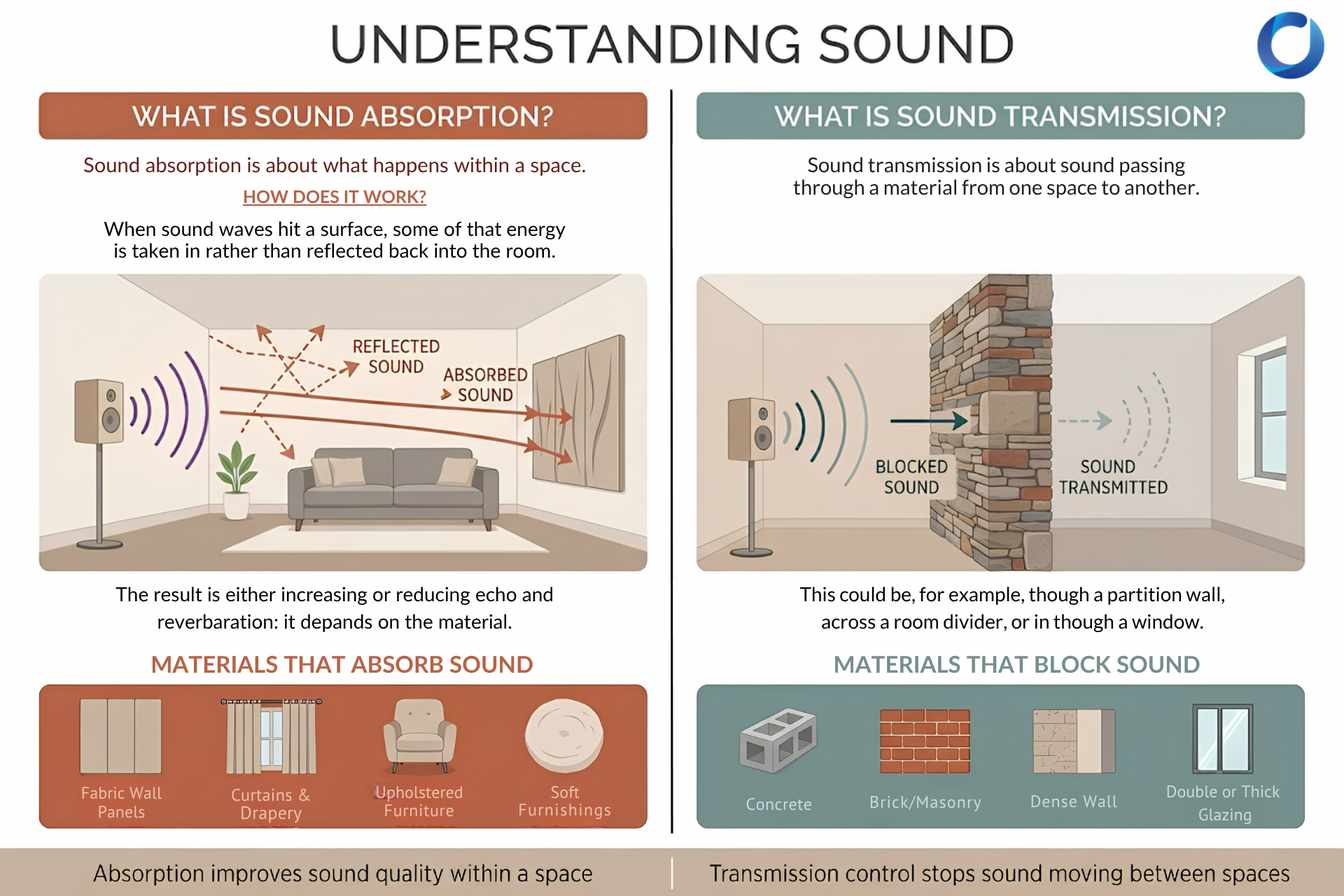
While soundproofing and sound absorption are often confused, they serve different purposes:
Soundproofing reduces sound transmission from one space to another.
Sound absorption reduces sound reflections within a space, thereby improving clarity and reducing echo and reverberation.
As a distributor of BRU fabrics in Malaysia, serving residential, hospitality, commercial, and contract furnishing markets, we have observed growing interest in fabric-based acoustic solutions. Curtains, upholstery, and fabric-wrapped wall panels are increasingly being specified not only for aesthetics but also for their acoustic performance.
Understanding how fabrics contribute to acoustic comfort requires a basic understanding of sound measurements.
Understanding Sound Measurements
Decibel (dB): Measuring Loudness
Sound levels are measured in decibels (dB). Typical examples:
| Environment | Approximate Sound Level |
|---|---|
| Quiet bedroom at night | 30 dB |
| Normal conversation | 55-65 dB |
| Busy urban street | 70-85 dB |
| Restaurant | 70-80 dB |
| Live event hall | 90-110 dB |
A reduction of:
- 3 dB = small but noticeable reduction
- 5 dB = clearly noticeable
- 10 dB = perceived as approximately half as loud
It is important to understand that curtains and fabric panels generally do not provide major soundproofing against external noise by themselves. Their primary benefit is sound absorption within a room.
Reverberation Time (RT60)
Professionals commonly evaluate room acoustics using RT60, which measures the time required for sound to decay by 60 dB after the sound source stops. Typical targets:
| Space | Recommended RT60 |
|---|---|
| Bedroom | 0.3-0.5 sec |
| Living room | 0.4-0.7 sec |
| Meeting room | 0.5-0.8 sec |
| Classroom | 0.6-0.8 sec |
| Hotel ballroom | 0.8-1.2 sec |
| Concert hall | 1.8-2.2 sec |
When RT60 becomes too high, occupants perceive the space as "echoey" or "boomy."
Noise Reduction Coefficient (NRC)
The most common measure for sound absorption materials is NRC, which ranges from 0.00 to 1.00. The higher the NRC, the more sound energy is absorbed rather than reflected.
| Material | Typical NRC |
|---|---|
| Concrete wall | 0.01-0.03 |
| Glass | 0.03-0.05 |
| Timber panel | 0.05-0.10 |
| Standard curtain fabric | 0.10-0.25 |
| Heavy pleated drapery | 0.35-0.60 |
| Fabric-wrapped acoustic panel | 0.70-1.00 |
How We Test: Inside the Acoustic Laboratory
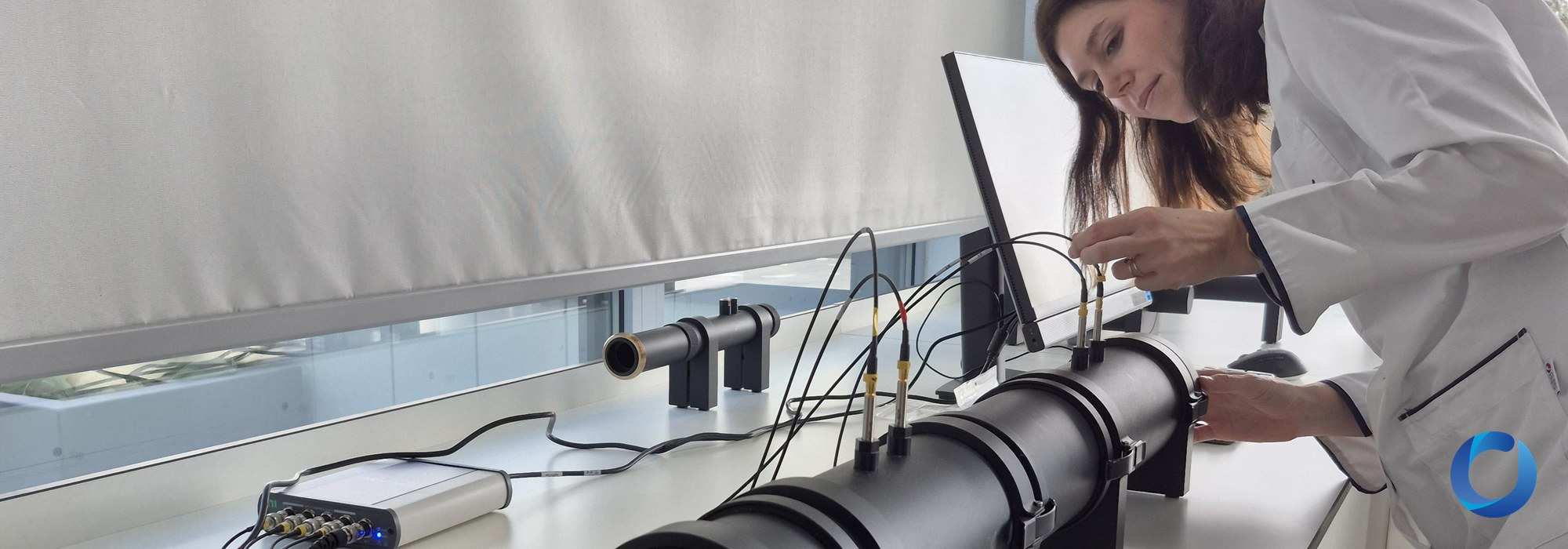
Acoustic performance claims should be backed by measurement, not marketing language. The fabric acoustic data featured in this article was measured at an independent acoustic laboratory. Sound absorption was measured using the two-microphone transfer-function method defined in ISO 10534-2, and sound transmission was measured using the four-microphone transfer-matrix method defined in ASTM E2611.
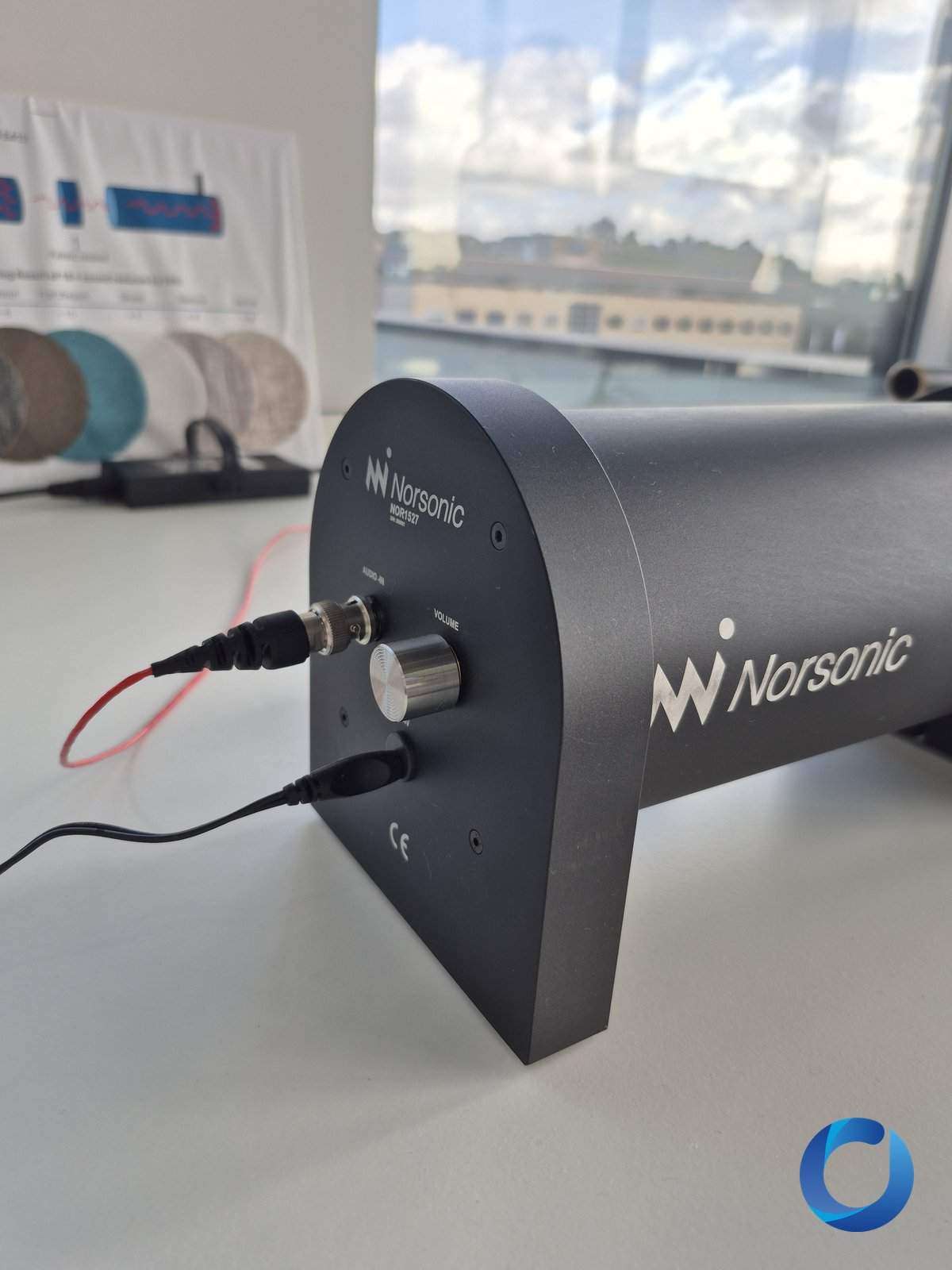
The Norsonic impedance tube: a controlled “sound corridor” for fabric testing.
The test works like this:
- A speaker at one end of the tube plays broadband white noise, a signal containing every frequency at equal energy, so nothing is missed.
- The fabric sample is clamped across the middle of the tube.
- Two pairs of precision microphones listen on each side of the sample: the pair in front measures how much sound is reflected back, and the pair behind measures how much passes through.
- Comparing the signals reveals exactly how much sound energy the fabric absorbed, reflected, and transmitted.
The microphones work in pairs for a simple reason: a single microphone can only hear the combined sound at its own position, where incoming and reflected waves are already mixed. By comparing the timing of the signal at two known positions, each pair can tell which direction the sound is travelling, separating the incoming wave from the reflected one in front of the fabric, and the transmitted wave from any stray reflections behind it. Absorption is then calculated from the energy left over: whatever was neither reflected nor transmitted was absorbed by the fabric.
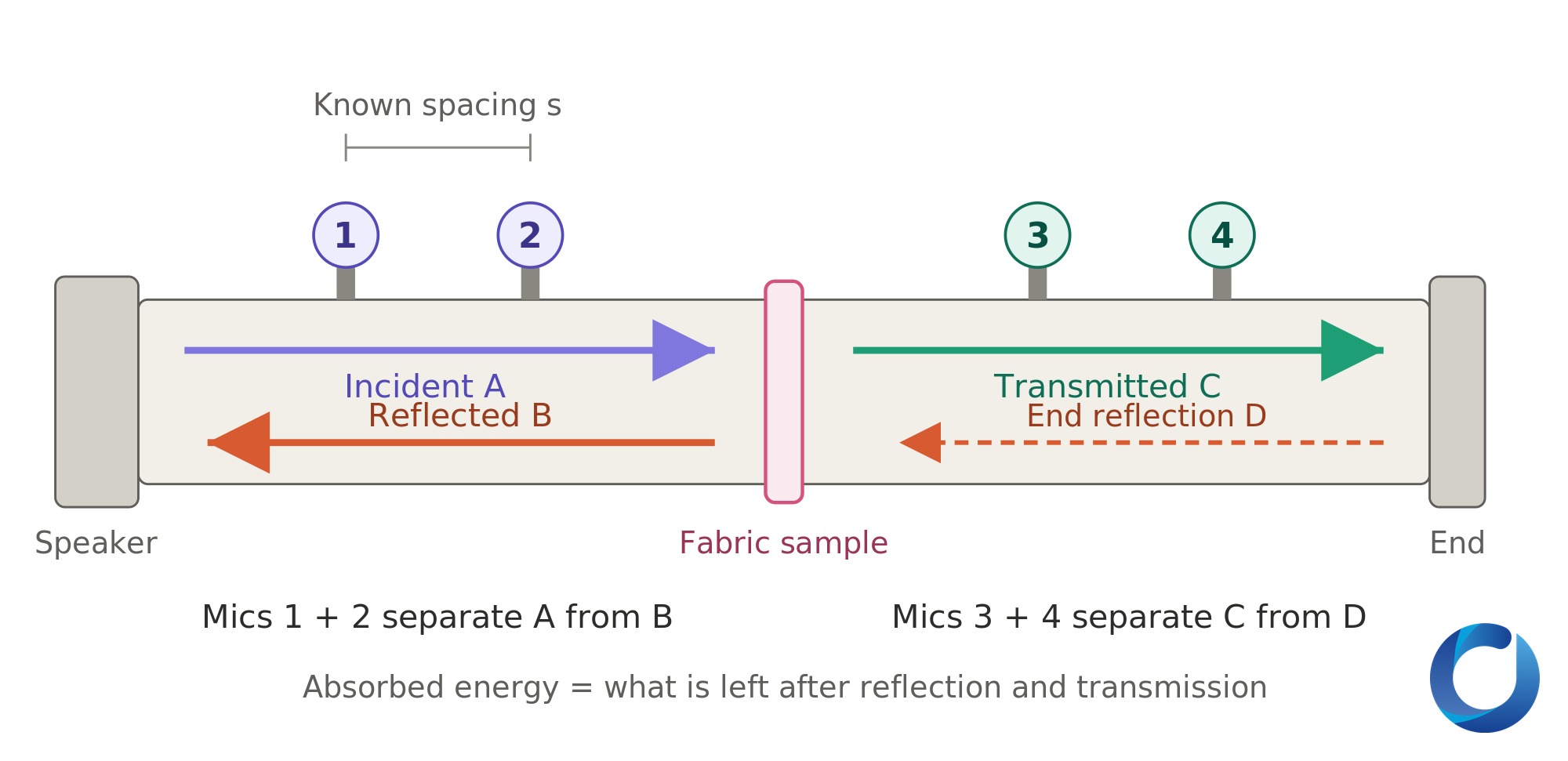
How the four microphones work: the front pair separates incoming sound from reflections, the rear pair isolates what passes through the fabric.
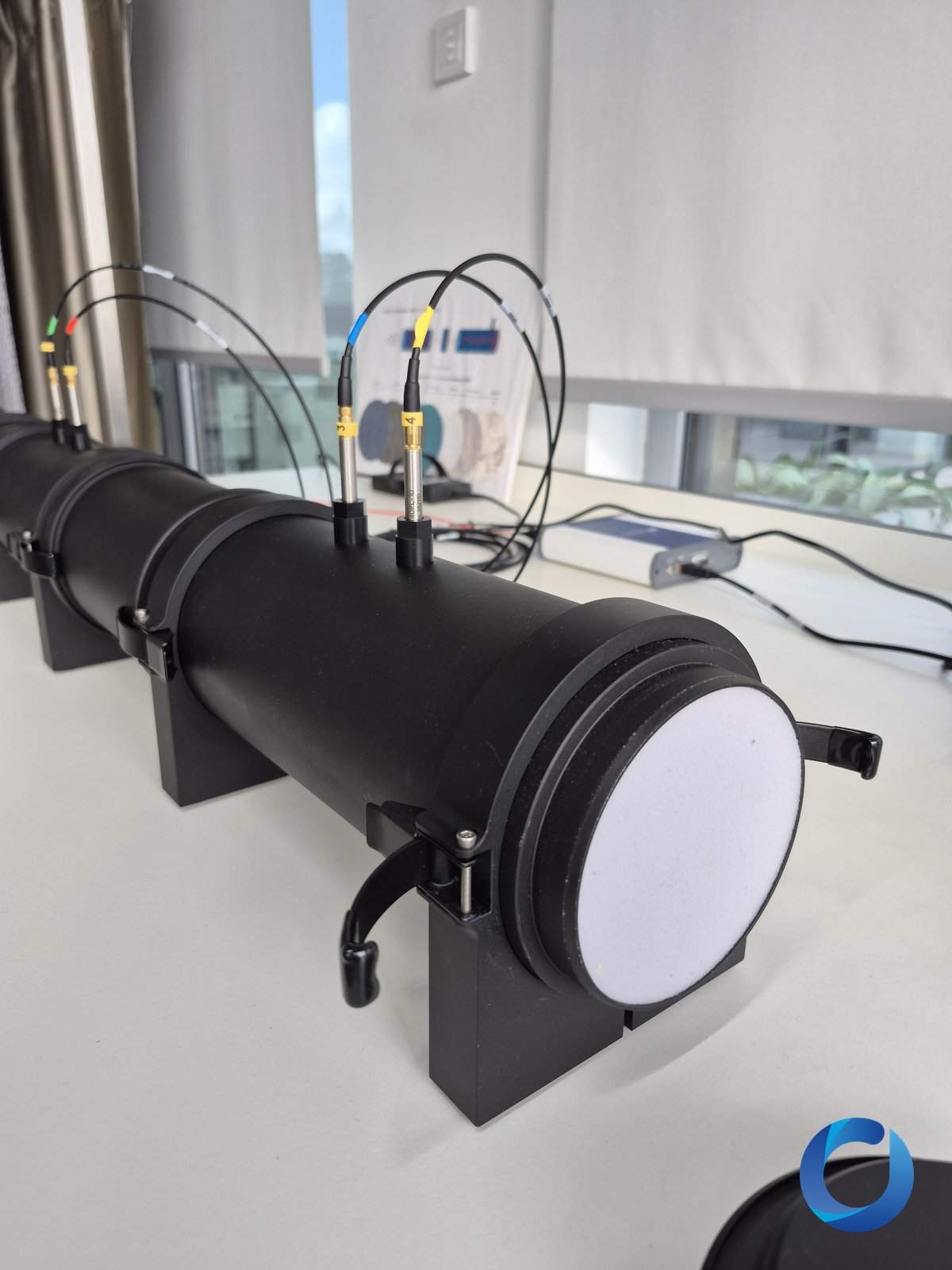
Ready for testing: a sample disc clamped at the mouth of the impedance tube.
A lab technician swaps fabric samples in the impedance tube between test runs.
Sealing the tube: with the sample clamped in the middle, the sections lock together to form an airtight sound corridor.
Because the tube is a sealed, controlled environment, any reduction measured is purely the fabric’s doing. Testing covers approximately 50 Hz to 6,400 Hz, which comfortably spans the sounds people most want to tame: speech, restaurant chatter, echo, and traffic harshness, most of which sit between 250 Hz and 4,000 Hz. The laboratory uses two tube sizes to achieve this range: a large tube for low frequencies and a smaller tube, with its own miniature sample discs, for high frequencies. The software combines both results into a single performance curve.
The test in progress: white noise, a steady “shhh” containing every frequency at once, plays inside the sealed tube.
Two tubes, one test: the large tube measures low frequencies while the smaller tube handles the highs.
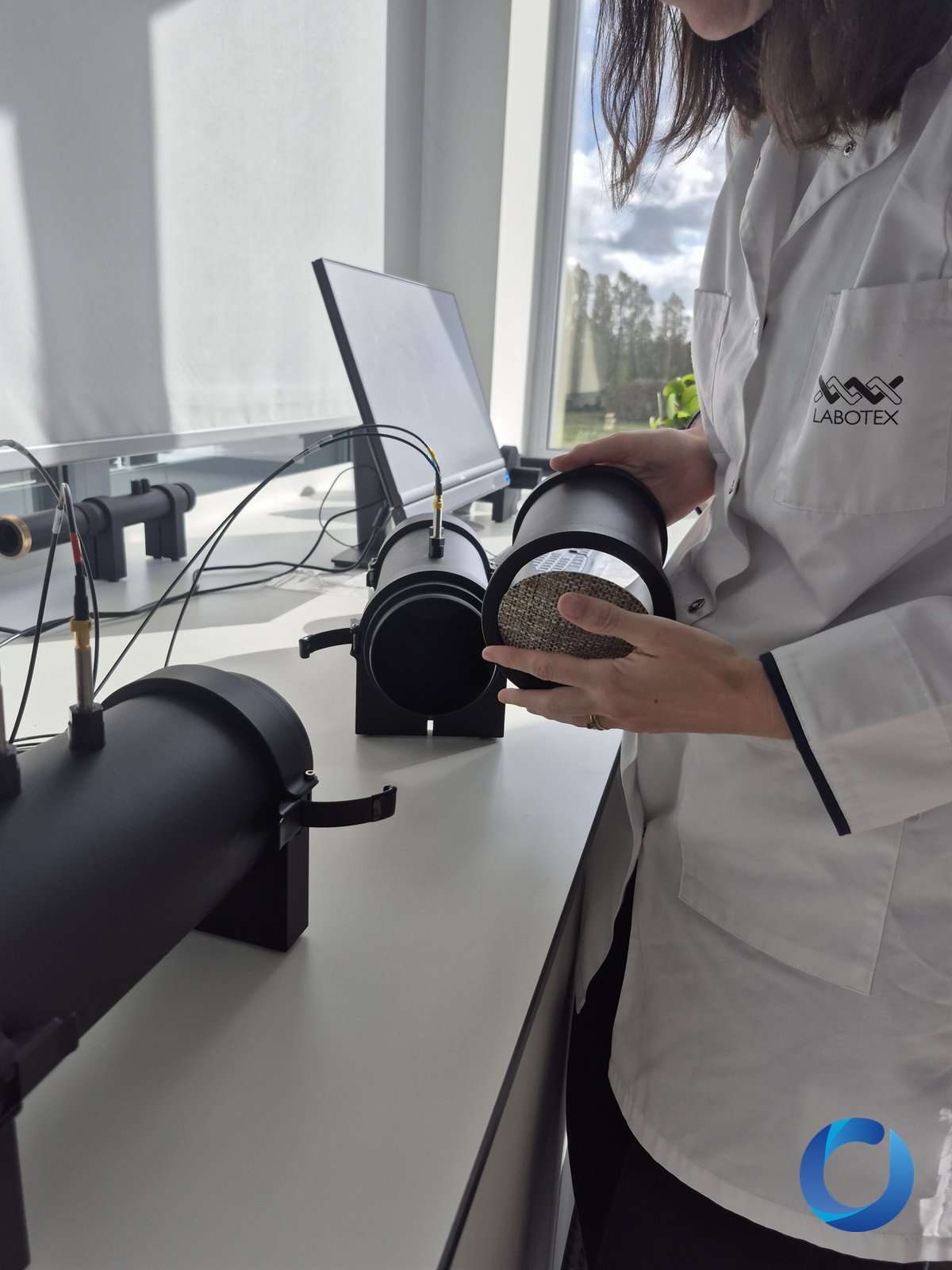
A Labotex technician loads a fabric sample disc into the impedance tube.
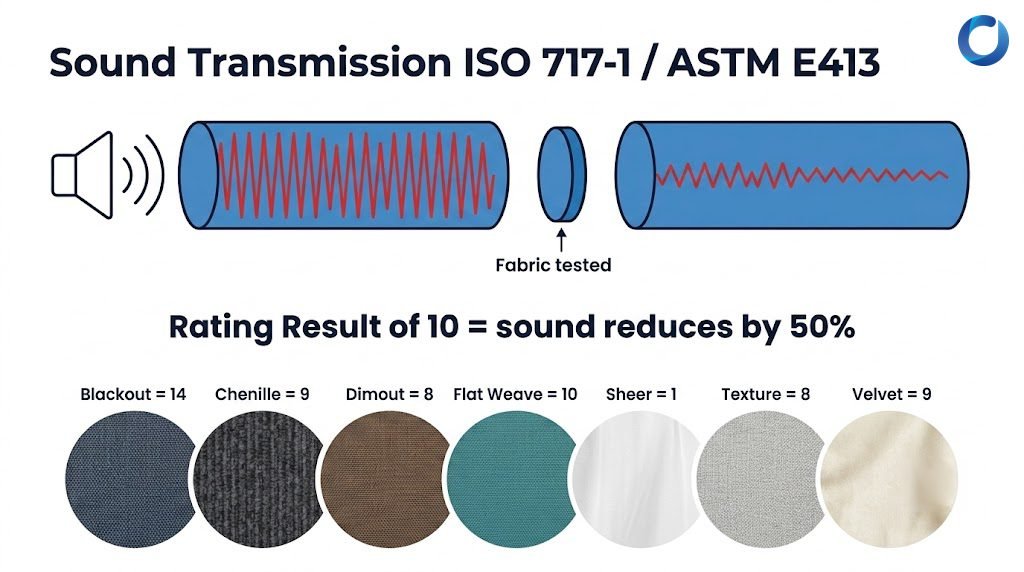
Measured sound transmission results: heavier, denser constructions block more sound.
The results confirm what physics predicts: a multi-layer blackout construction achieved a weighted transmission rating of 14, while a light sheer measured 1. This weighted transmission rating is a single-number index derived from the fabric's measured transmission loss across the tested frequency range; a higher number means more sound is blocked. It is used here to compare fabrics against each other and is not equivalent to the STC or Rw ratings used for walls and glazing. Laboratory figures are obtained under controlled conditions; performance in a real room also depends on installation, coverage, and the space itself.
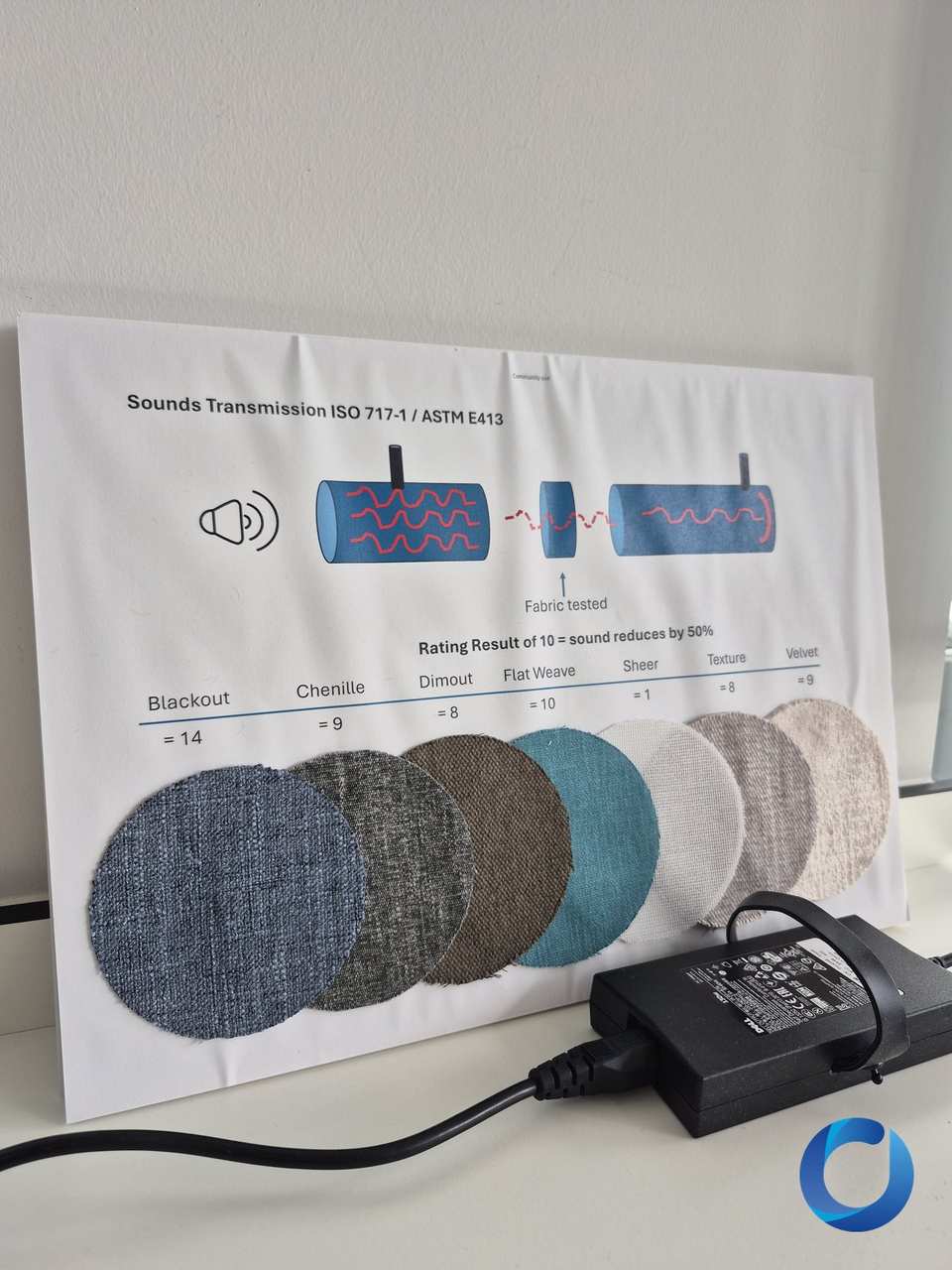
The tested fabric samples with their weighted transmission ratings, from blackout (14) down to sheer (1).
Example 1: Curtains in a Large Event Hall
Consider a ballroom measuring 30 m long, 20 m wide, and 6 m high, giving a volume of 3,600 m³. With hard surfaces throughout, the RT60 may exceed 2.0 to 2.5 seconds. This often results in:
- Poor speech intelligibility
- Excessive echo
- Difficulties for presentations
- Increased sound system volume requirements
Installing Heavy Pleated Curtains
Suppose one entire 30 m wall is covered with heavy acoustic drapery in a full-height 6 m installation at 100% fullness (double pleating). That gives a curtain area of 180 m² with a typical absorption coefficient of 0.40 to 0.60.
The resulting acoustic improvement can reduce RT60 by approximately 15-30%, improve speech clarity significantly, reduce perceived echo, and allow lower PA system volume. For example, RT60 may reduce from 2.2 seconds to approximately 1.6-1.8 seconds. The hall will sound noticeably more controlled and comfortable.
What Occupants Experience
Before curtains: "Words overlap and bounce around the room."
After curtains: "Speech sounds clearer and less tiring to listen to."
This is particularly valuable in hotel ballrooms, convention centres, houses of worship, multi-purpose halls, and corporate event spaces.
Example 2: Bedroom Facing a Busy Street
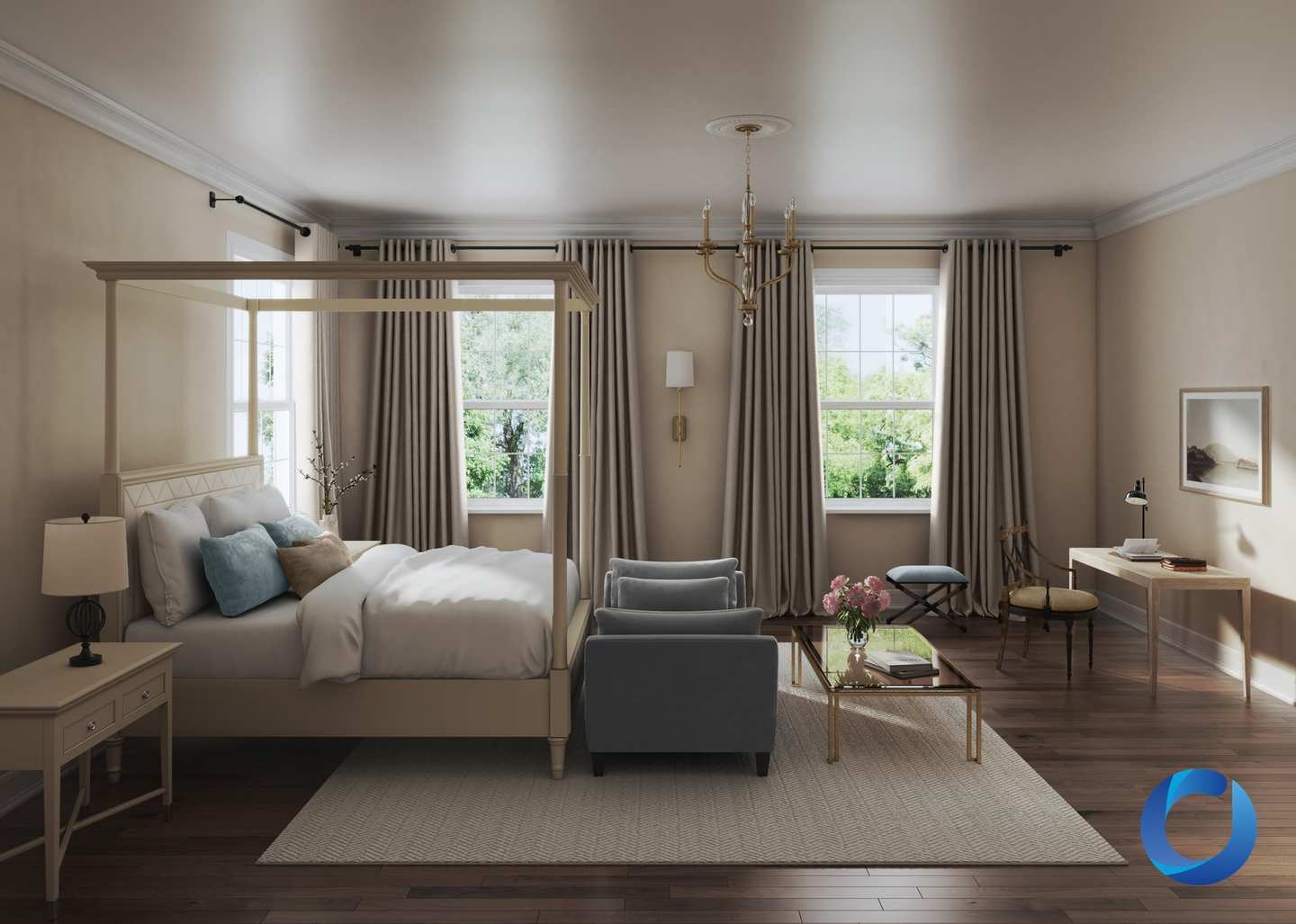
Lights Out / Collection
Consider a bedroom facing a road carrying 70-80 dB of traffic noise. Many homeowners hope curtains will completely block external noise. Unfortunately, even very heavy curtains cannot replace proper acoustic glazing.
What Curtains Can Realistically Do
Heavy multi-layer curtains may provide:
- 3-7 dB reduction of higher-frequency noise
- Improved sleeping comfort
- Reduced harshness of traffic sounds
The actual benefit depends on curtain weight, distance from the window, fullness of pleating, and window sealing quality. The greatest improvement is usually achieved when curtains:
- Extend beyond window edges
- Reach floor level
- Include generous pleating
- Have an air gap between curtain and glass
Combined Benefits
While external noise reduction may be modest, curtains also reduce room reverberation, absorb reflected sound from walls and windows, and create a calmer acoustic environment. As a result, occupants often perceive the room as quieter even when measured sound reduction is moderate.
Example 3: Upholstery and Fabric-Wrapped Wall Panels
Many people underestimate the acoustic contribution of furniture and upholstered surfaces.
Upholstered Furniture
Soft furnishings such as sofas, lounge chairs, headboards, cushions, and fabric ottomans absorb mid- and high-frequency sounds. Compared to an empty room, a furnished room often exhibits 20-40% less reverberation. This explains why newly completed homes frequently sound "echoey" until furnished.
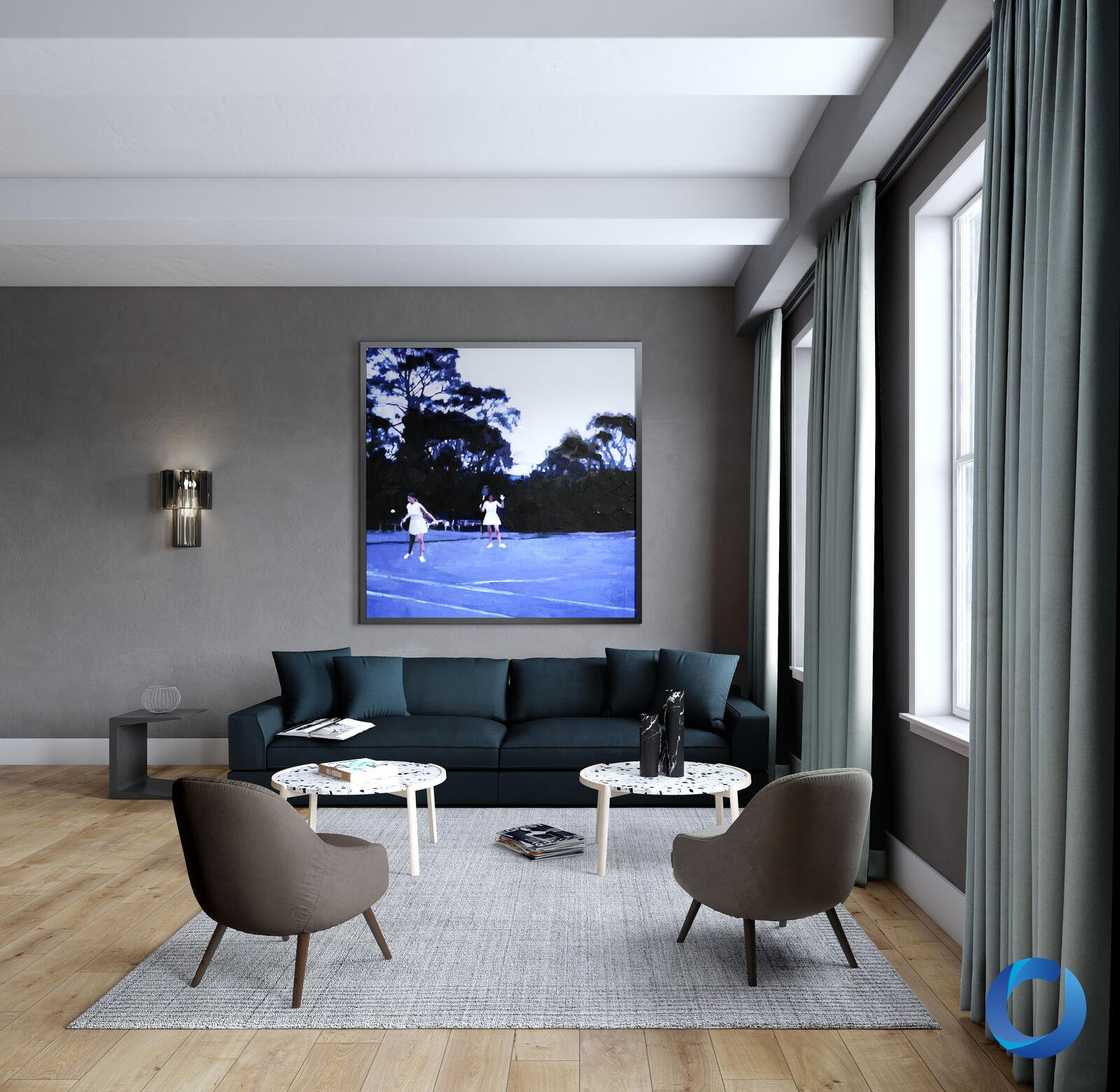
Veluxe / Collection
Fabric-Wrapped Acoustic Panels
The most effective fabric-based acoustic solution is often a fabric-wrapped wall panel. Typical construction includes a decorative fabric finish, an acoustic foam or mineral wool core, a rigid backing board, and mechanical wall mounting. These systems commonly achieve NRC 0.75–1.00. NRC is the average of a material's absorption coefficients at 250, 500, 1000, and 2000 Hz, so this means they absorb roughly 75–100% of incident sound across the mid-frequency range on average.
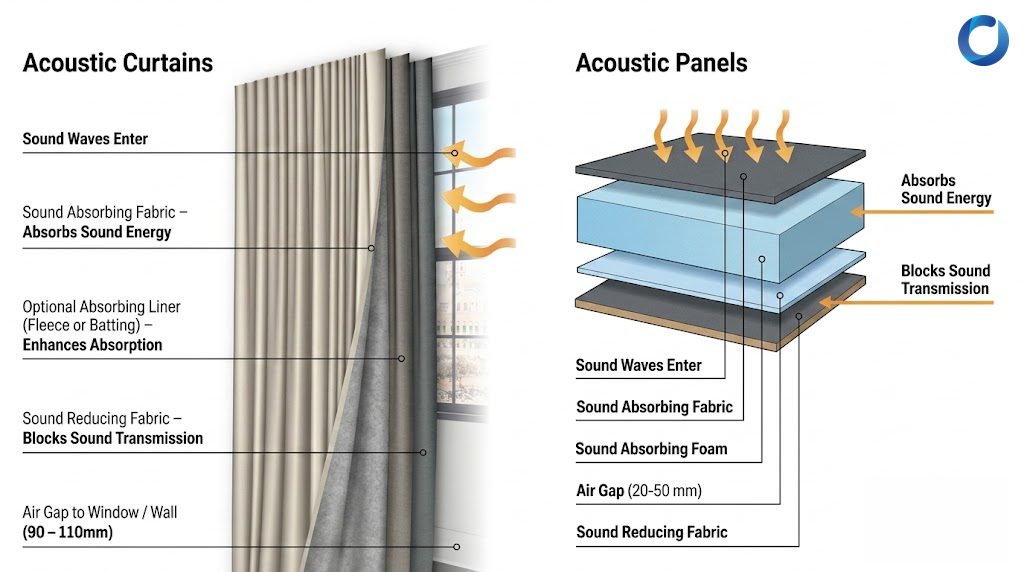
How acoustic curtain layers and fabric-wrapped panels are constructed. Image source from https://fibreguard.com/blog/fabrics-acoustics
Applications
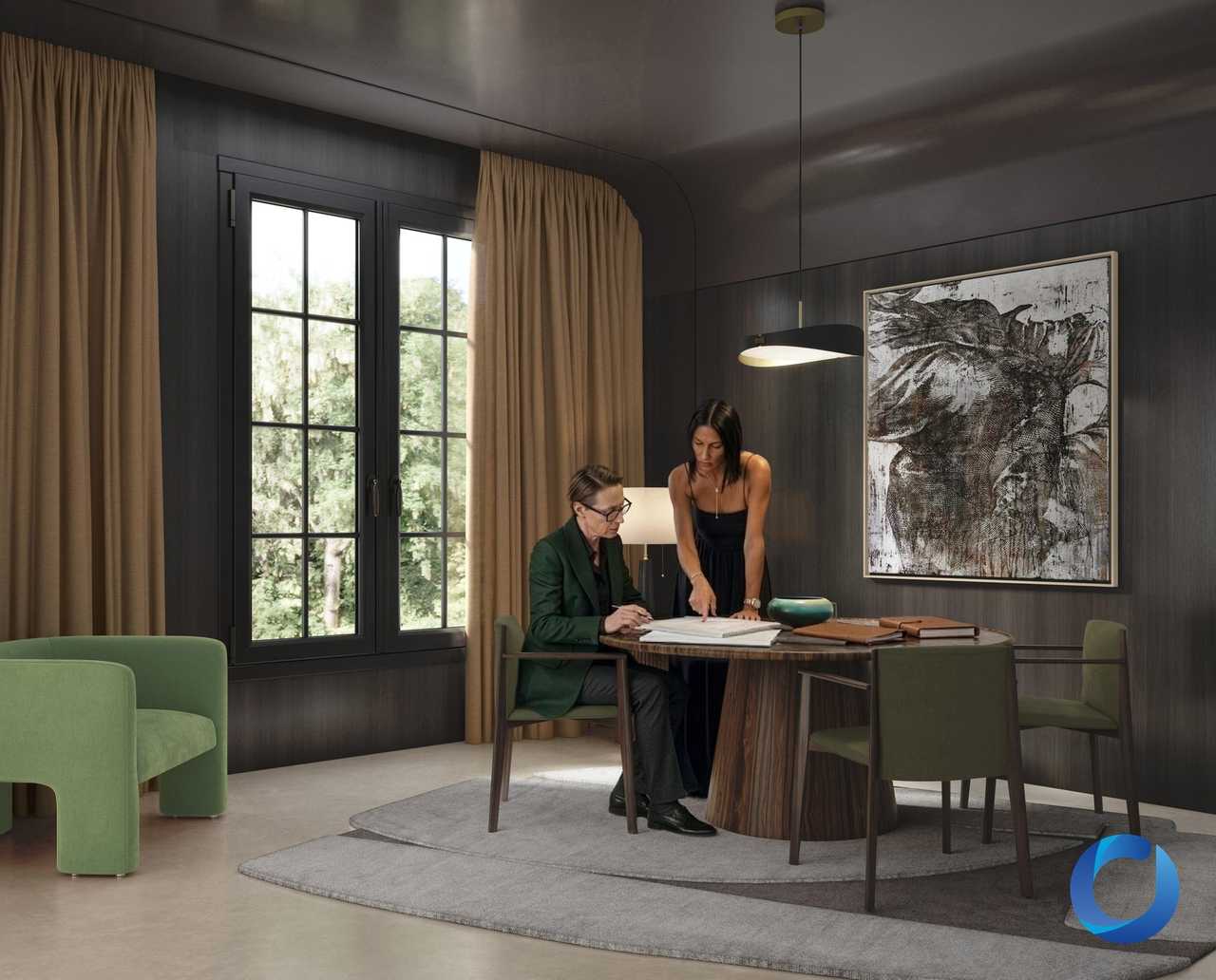
Noblesse / Collection
| Setting | Key Acoustic Benefits |
|---|---|
| Hotels | Reduced corridor noise reflections, improved guest comfort, better meeting room acoustics |
| Residential homes | Home theatres, media rooms, bedrooms, and study rooms that sound calmer and clearer |
| Restaurants | Reduced crowd noise, improved conversation comfort, a more premium dining experience |
| Offices | Improved speech privacy, reduced distractions, better concentration |
Common Misconceptions
Myth 1: "Thicker fabric automatically means better sound absorption."
Reality: Fabric weight helps, but construction, pleating, backing materials, and installation method often have greater influence.
Myth 2: "Curtains can completely soundproof a room."
Reality: Curtains primarily absorb reflected sound. True soundproofing requires mass, airtight construction, and specialised acoustic assemblies. Our own laboratory results make the distinction clear: even a high-performing blackout fabric reduces transmission, it does not eliminate it.
Myth 3: "Acoustic treatment is only for recording studios."
Reality: Most acoustic complaints today occur in homes, hotels, restaurants, meeting rooms, and ballrooms, where occupant comfort and speech clarity are increasingly important.
Frequently Asked Questions
Why are four microphones used in the acoustic lab test?
Two microphones sit in front of the fabric and two behind it. Each pair compares sound at two known positions to separate sound travelling toward the fabric from sound bouncing back, so reflection, transmission, and absorption can each be measured accurately.
What NRC rating should I look for in curtains?
Standard curtain fabric absorbs relatively little (NRC 0.10–0.25). For a noticeable acoustic improvement, choose heavy pleated drapery (NRC 0.35–0.60), or fabric-wrapped acoustic panels (NRC 0.70–1.00) where maximum absorption is needed.
How much can heavy curtains reduce echo in a room?
Covering one full wall of a large hall with heavy pleated drapery can reduce reverberation time by roughly 15–30%, which makes speech noticeably clearer and less tiring to listen to.
Are laboratory results the same as real-room performance?
Laboratory figures are measured under controlled conditions. Real-room results also depend on installation, pleating fullness, coverage area, and the room itself, so treat lab ratings as a reliable comparison between fabrics rather than an exact prediction.
Conclusion
Modern acoustic design is no longer limited to specialist recording studios and theatres. Today's homeowners, hotel operators, architects, and interior designers increasingly recognise that acoustic comfort is an essential component of quality interiors.
Fabrics play an important role in achieving this objective. Heavy curtains can reduce reverberation and improve speech clarity in large halls. Sound-absorbing draperies can help create quieter and more comfortable bedrooms. Upholstered furniture and fabric-wrapped acoustic wall panels further contribute to reducing echoes and creating pleasant acoustic environments.
When properly specified, fabric solutions offer a unique combination of aesthetics, comfort, and acoustic performance, making them an increasingly valuable element in contemporary interior design. The acoustic performance figures referenced in this article are drawn from independent laboratory testing.
Article Suggestion :
- Curtain Trend For Your Home In 2026
- Latest Curtain Designs 2025
- Matching European Curtains Fabrics and Sofas Perfectly
- The Sound of Silence: How Curtains Improve Your Room's Acoustics
- Modern European Curtain Trends for 2025
- The Art of Fabric: A Modern Guide to Selecting The Right Curtain Fabric for Your Home
- How fabric affects acoustics: the interior designer's guide to sound absorption and transmission
Looking for quality sofas with creative fabrics and easy maintenance? Find the nearest showroom at acaciasofa.co
If you are searching for the perfect curtain to express your personality at home, find our nearest boutiques at acaciacurtain.co