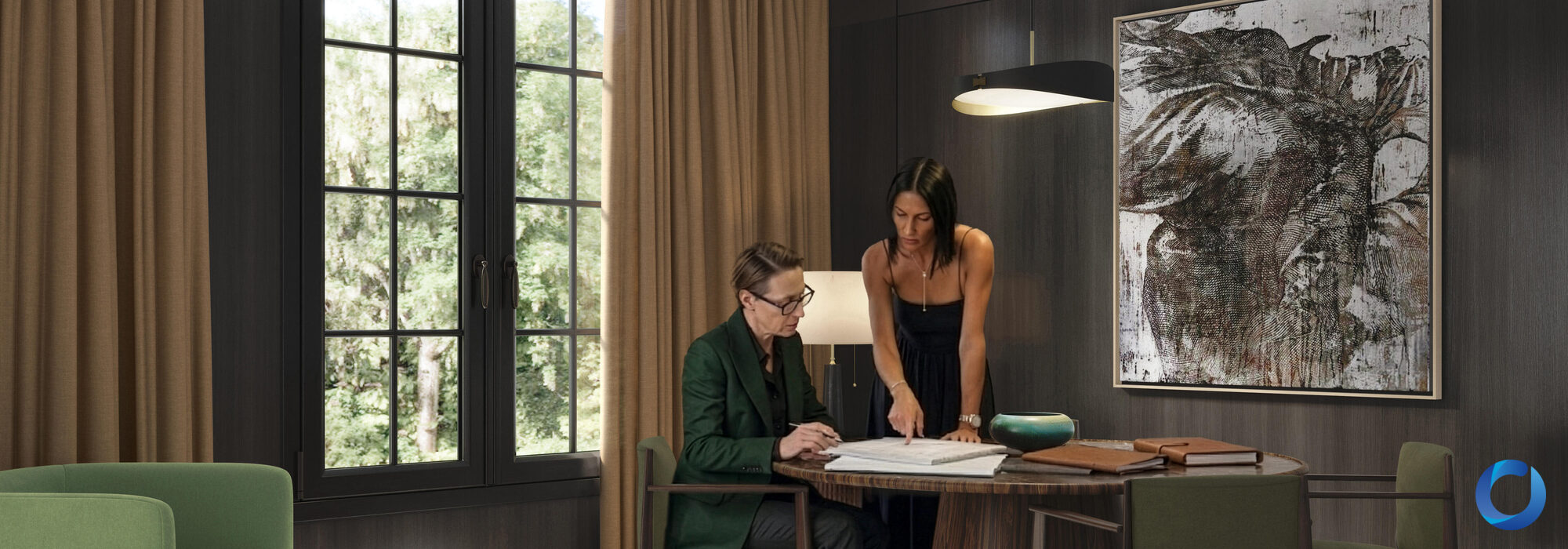
The Sound of Silence: How Curtains Improve Your Room's Acoustics
July 27, 2026
by Karen Chan & JW
Acoustic Comfort - The Fifth Dimension of Interior Design
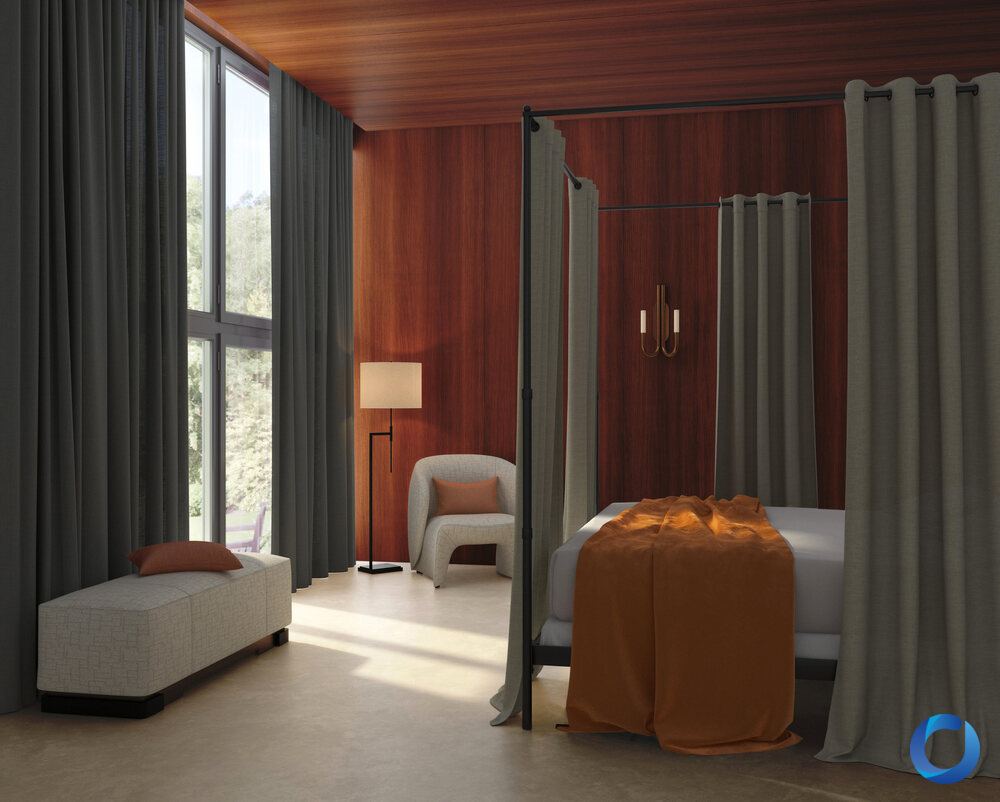
Full-height drapery from the Noblesse collection wraps the room in fabric, softening both light and sound.
Noblesse / Collection
Why Do Beautiful Rooms Sound Noisy?
As contemporary architecture increasingly embraces hard, reflective materials such as glass, stone, concrete and polished timber, many interiors have become visually stunning but acoustically challenging.
One of the latest topics that I have often heard lately is about how to reduce sound reflections in rooms and indoor spaces. How can beautiful, modern architecture with its buildings of glass, stone, concrete, marble or even steel reduce acoustic problems?
Visually beautiful, but terrible acoustically.
Architecture has long been celebrated for what we can see—the elegance of a façade, the warmth of natural timber, the timeless beauty of marble, or the transparency of glass. Yet one of the most important qualities of a well-designed interior is often invisible.
It is how the space sounds.
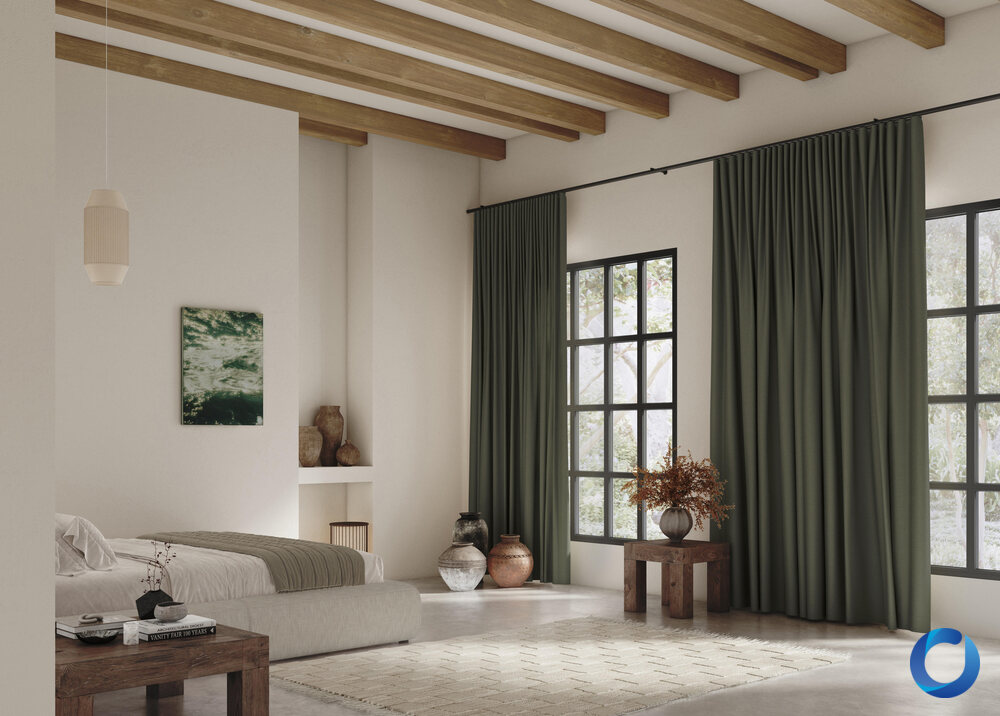
Even beautiful, hard-surfaced rooms need soft furnishings. Floor-to-ceiling curtains in the Altura collection add warmth and absorption.
Altura / Collection
Have you ever walked into a beautifully designed restaurant only to struggle to hear the person seated opposite you? Or stepped into a newly completed home where every conversation seems to echo through the empty rooms? Perhaps you've attended a presentation in a grand ballroom where the speaker's words became blurred by the room itself.
These experiences are rarely the result of poor interior design.
More often, they are symptoms of poor acoustic comfort.
Every spoken word, every footstep and every clink of a glass bounces repeatedly around the room before eventually fading away. The result is a space that feels noisy, tiring and uncomfortable—even when the sound itself is not particularly loud.
This is where soft furnishings quietly perform one of their most valuable roles.
Curtains, upholstered furniture and fabric-wrapped wall panels do far more than soften the appearance of an interior. When thoughtfully selected and properly installed, they also absorb unwanted sound reflections, improve speech clarity and create spaces that are calmer, more comfortable and far more enjoyable to occupy.
Acoustic comfort is rapidly becoming one of the defining characteristics of exceptional interior design. It is no longer sufficient for a space to look beautiful—it should also sound beautiful.
In many ways, acoustic comfort has become the fifth dimension of interior design.
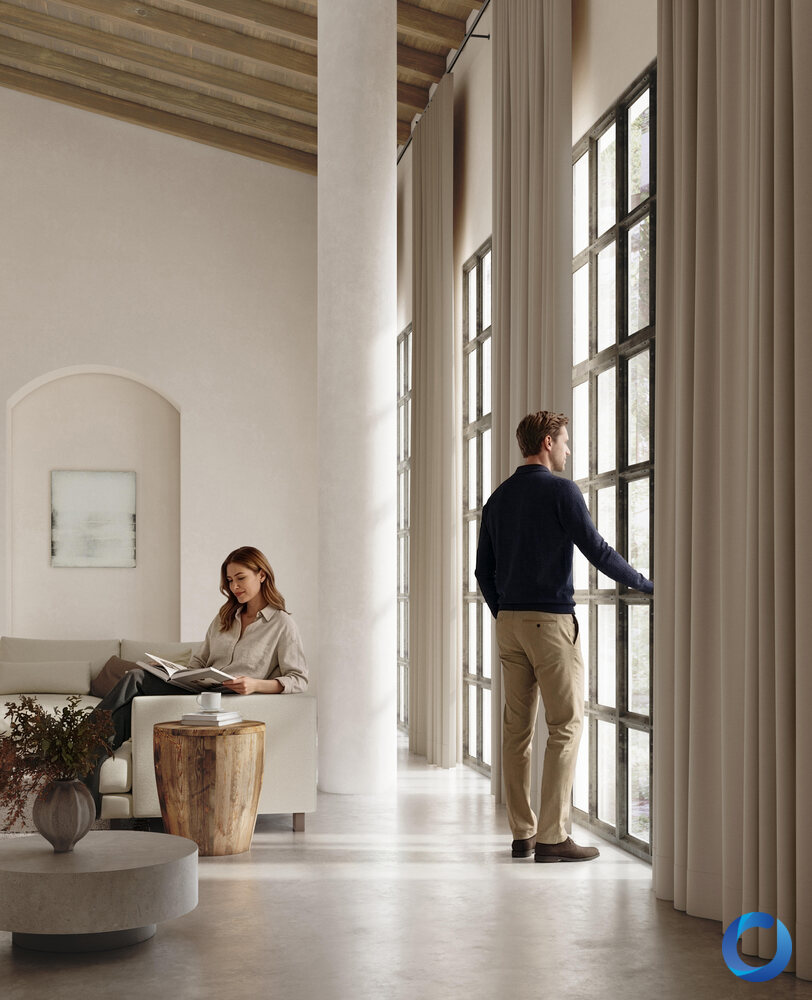
Acoustic comfort: spaces designed to sound beautiful, not only to look beautiful.
Altura / Collection
New to acoustics? This is the easy-read guide. For the full science, lab method and worked examples, see the technical companion: Understanding Sound Absorption in Soft Furnishings.
What Is Sound?
Simply put, sound is a vibration travelling through air.
Before we can understand how fabrics improve the acoustic comfort of an interior, it is helpful to understand what sound actually is.
Although we experience sound every day, few people—including many architects, interior designers and homeowners—have ever studied the science behind it. Yet understanding a few simple principles makes it much easier to appreciate why soft furnishings play such an important role in creating comfortable interior environments.
Whenever someone speaks, their vocal cords vibrate hundreds of times every second. These vibrations compress and expand the surrounding air, creating tiny pressure waves that travel away from the speaker in all directions.
Although these pressure changes are invisible, they move at approximately 343 metres per second (at room temperature), carrying energy until they encounter another object or surface.
Imagine dropping a pebble into a still pond.
Ripples spread outward across the water.
Sound behaves in a remarkably similar way.
Instead of travelling through water, however, sound waves travel through air, expanding in every direction until they eventually meet walls, ceilings, floors, furniture, curtains or people.
At this point, every sound wave reaches a crossroads.
Only three things can happen.
It can be reflected.
It can be absorbed.
It can be transmitted through the material.
Every building is therefore constantly managing sound energy.
Whether we realise it or not, every wall, ceiling, window, curtain, sofa and carpet is influencing how sound behaves inside the room.
The balance between reflection, absorption and transmission ultimately determines whether an interior feels calm and comfortable, or noisy and fatiguing.
Understanding these three behaviours forms the foundation of modern architectural acoustics.
What Happens to Noise in a Room?
Every interior is therefore a continuous balance between reflection, absorption and transmission. The quality of an acoustic environment depends not on eliminating sound altogether, but on managing how sound behaves once it enters a space.
Imagine standing in the centre of an empty hall and clapping your hands.
The sharp clap immediately spreads throughout the room as sound waves. As those waves strike different surfaces, each material responds differently.
Some surfaces behave almost like mirrors.
A polished marble floor, a glass wall or an exposed concrete ceiling reflects most of the sound energy back into the room. These repeated reflections build upon one another, creating the echoes and reverberation that make conversations more difficult to hear.
Other materials behave very differently.
Soft furnishings such as curtains, upholstered furniture and acoustic wall panels absorb part of the sound energy instead of reflecting it. Rather than allowing the sound to continue bouncing around the room, these materials help reduce reverberation and improve speech clarity.
Finally, some sound energy passes directly through the material itself. This is known as sound transmission. Windows, lightweight walls and doors allow varying amounts of sound to travel from one room to another, which is why sound absorption and soundproofing should never be confused. They solve different acoustic problems.
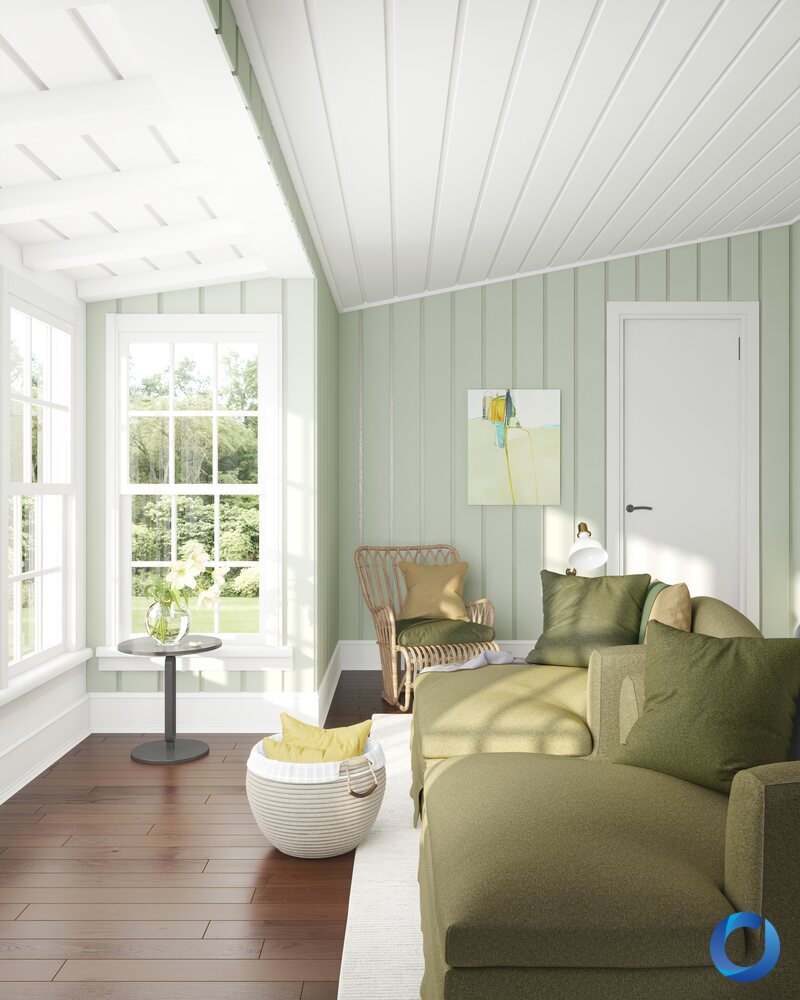
Upholstered seating and drapery, shown here in the Chief collection, absorb sound that hard walls and glass would otherwise reflect.
Chief / Collection
→ Go deeper: how echo is measured over time using Reverberation Time (RT60). Understanding Sound Measurements
Why Do Modern Homes Sound Noisier?
Unlike soft, porous materials, hard surfaces reflect a large proportion of the sound energy that strikes them.
One reason acoustic comfort has become increasingly important is the way contemporary architecture has evolved.
Modern interiors celebrate openness, clean lines and minimalist aesthetics. Glass curtain walls flood buildings with natural light, polished stone creates a luxurious appearance, while exposed concrete and large-format porcelain tiles provide a contemporary architectural language that is admired around the world.
Visually, these materials are stunning.
Acoustically, however, they present a different challenge.
Every conversation, every footstep and every movement of furniture creates additional reflections that continue travelling throughout the room before gradually fading away.
The result is an interior that may look spectacular, yet feel surprisingly noisy.
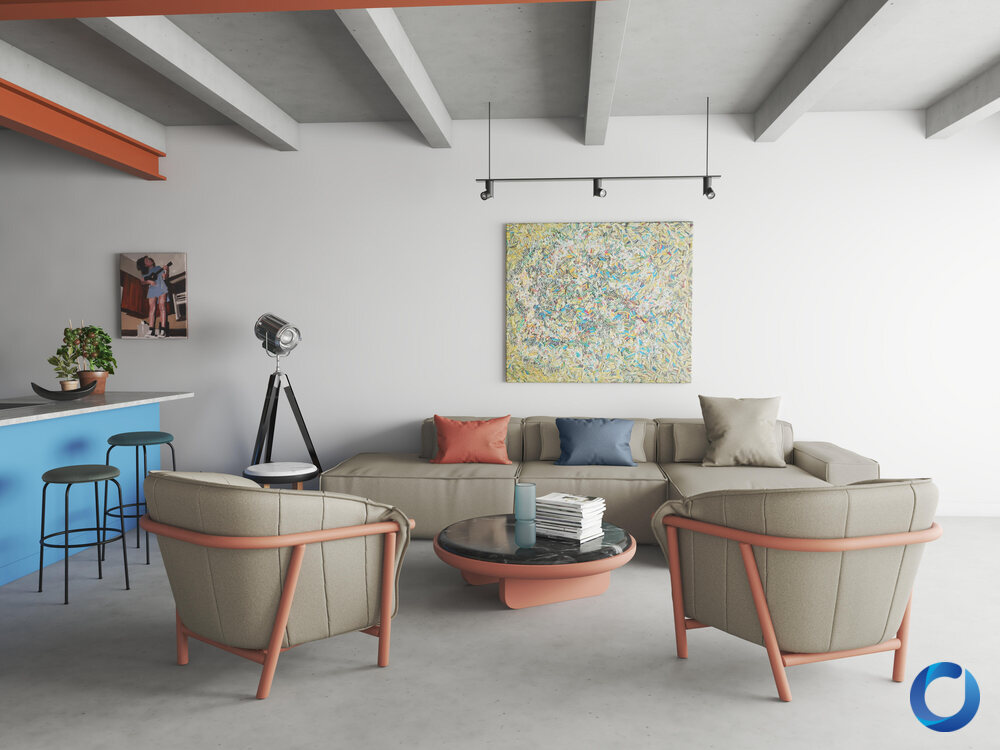
Modern interiors mix concrete, glass and hard surfaces. Upholstery from the Cubo collection helps tame the extra reflections.
Cubo / Collection
This explains why many beautifully designed restaurants become difficult places for conversation, why newly completed homes often sound echoey before furniture is installed, and why hotel ballrooms rely heavily on curtains and upholstered finishes to improve speech intelligibility during conferences and events.
As architects increasingly design for openness and natural materials, acoustic comfort has become an essential consideration rather than an afterthought. Today, successful interior design must satisfy not only our sense of sight, but also our experience of sound.
→ Go deeper: see three real worked examples — a large event hall, a street-facing bedroom, and upholstery with fabric-wrapped panels. Worked Examples
Just for illustration, an example of approximate sound levels are provided in the table below:
How Loud Is Everyday Noise? Decibels (dB) Made Simple
Sound levels are measured in decibels (dB). Typical examples:
| Environment | Approximate Sound Level |
|---|---|
| Quiet bedroom at night | 30 dB |
| Normal conversation | 55–65 dB |
| Busy urban street | 70–85 dB |
| Restaurant | 70–80 dB |
| Live event hall | 90–110 dB |
A reduction of:
- 3 dB = small but noticeable reduction
- 5 dB = clearly noticeable
- 10 dB = perceived as approximately half as loud
It is important to understand that curtains and fabric panels generally do not provide major soundproofing against external noise by themselves. Their primary benefit is sound absorption within a room.
→ Go deeper: the decibel (dB) scale and how loudness is measured, explained in full. Measuring Loudness (dB)
The finest interiors are not only designed to be seen, they are also designed to be heard.
Sound Absorption vs Soundproofing: What Is the Difference?
While soundproofing and sound absorption are often confused, they serve different purposes:
- Soundproofing reduces sound transmission from one space to another.
- Sound absorption reduces sound reflections within a space, thereby improving clarity and reducing echo and reverberation.
As a distributor of BRU fabrics in Malaysia, Acacia Fabrics serves residential, hospitality, commercial, and contract furnishing markets. The growing interest in fabric-based acoustic solutions is not surprising. Curtains, upholstery, and fabric-wrapped wall panels are increasingly being specified not only for aesthetics but also for their acoustic performance. Using appropriate well-planned acoustic treatments can effectively accomplish not only beautiful décor but also reduce noise transmissions and reverberations.
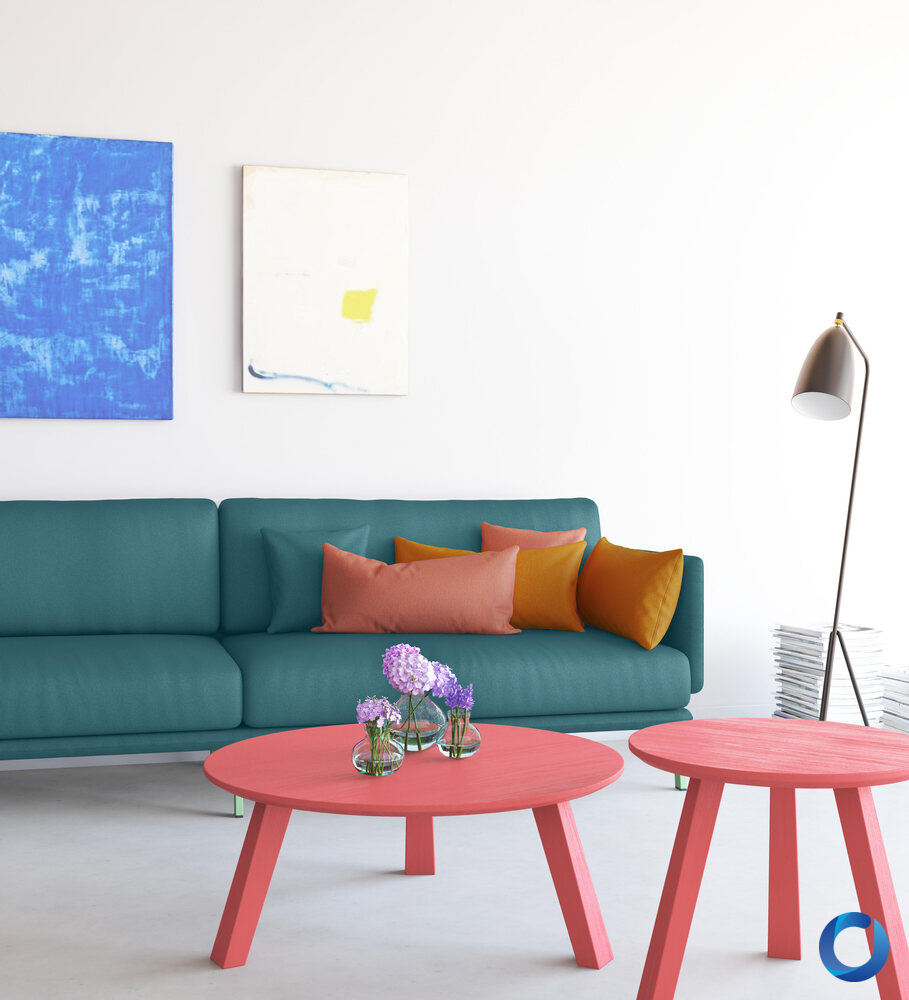
Fabrics like this Cubo upholstery absorb reflections inside a room. They calm echo rather than block noise between rooms.
Cubo / Collection
"I've often walked into beautifully designed restaurants where guests unconsciously lean forward and raise their voices. The décor is stunning, but the acoustics are exhausting. A few well-planned acoustic treatments could completely transform the dining experience."
— Karen's Insight
Why Curtains and Soft Furnishings Make a Room Quieter
By absorbing sound reflections and reducing reverberation, fabrics help create quieter, more comfortable environments where conversations become clearer and background noise is less intrusive.
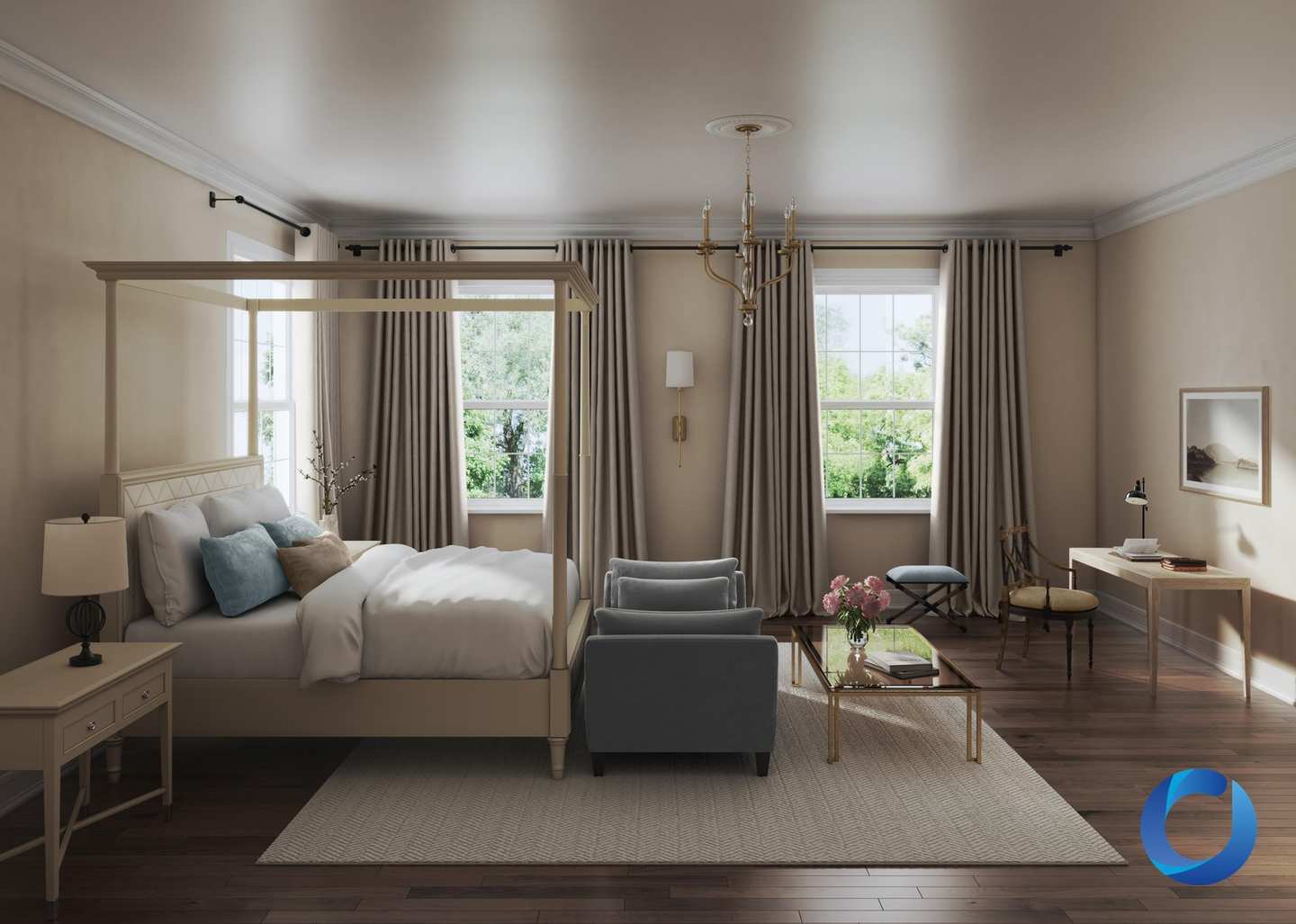
Curtains, upholstery and rugs absorb sound reflections, making a room feel calmer and quieter.
Lights Out / Collection
Few interior materials offer the versatility of fabrics. Available in an almost limitless range of colours, textures, patterns, and constructions, fabrics can be seamlessly incorporated into curtains, upholstered furniture, wall panels, headboards, acoustic panels, and other soft furnishings to complement virtually any interior design concept.
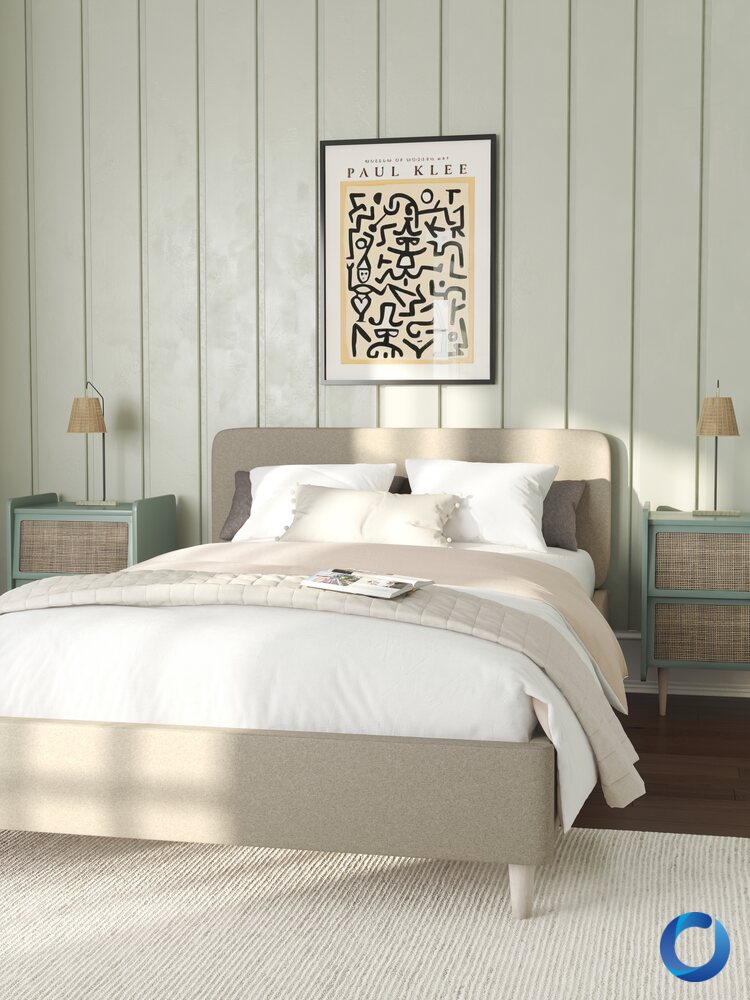
Headboards, upholstery and bedding, shown here in the Chief collection, all add sound-absorbing softness to a room.
Chief / Collection
Beyond their aesthetic appeal, fabrics provide multiple functional benefits. They help soften interior spaces visually, improve thermal comfort by reducing heat gain and controlling natural light, and most importantly, contribute to improved acoustic comfort.
This unique combination of design flexibility, comfort, and acoustic performance makes fabrics one of the most practical and elegant solutions for creating interiors that are not only visually beautiful, but also more enjoyable to live, work, and socialise in.
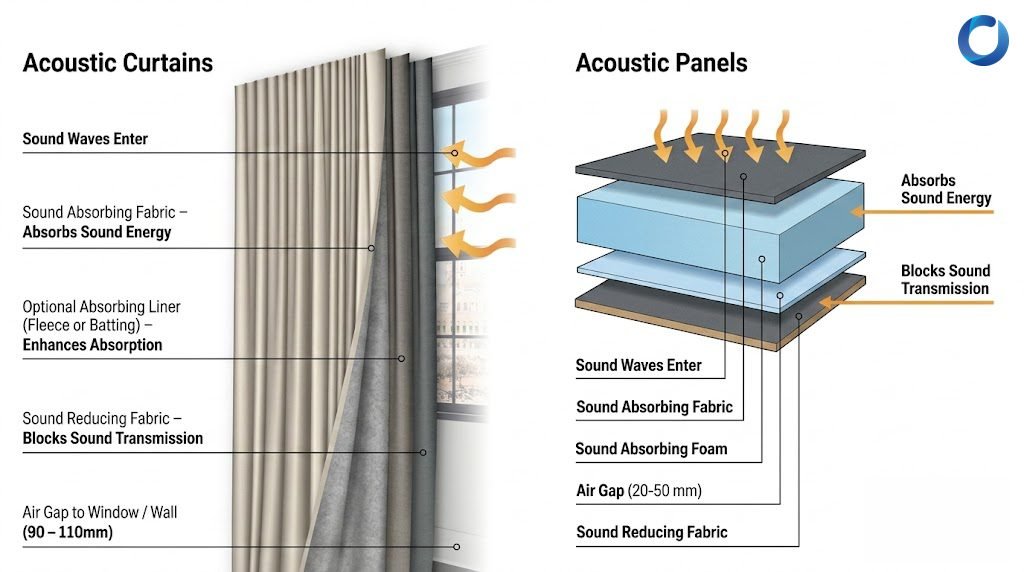
How acoustic curtains and fabric-wrapped panels are layered to absorb sound and reduce transmission.Image source from https://fibreguard.com/blog/fabrics-acoustics
What Do the Sound Ratings on Our Fabrics Mean?
Every fabric on our website is rated for how it handles sound, so you can choose with confidence. Two things matter: how well a fabric absorbs echo inside a room, and how much sound it stops from passing between rooms.
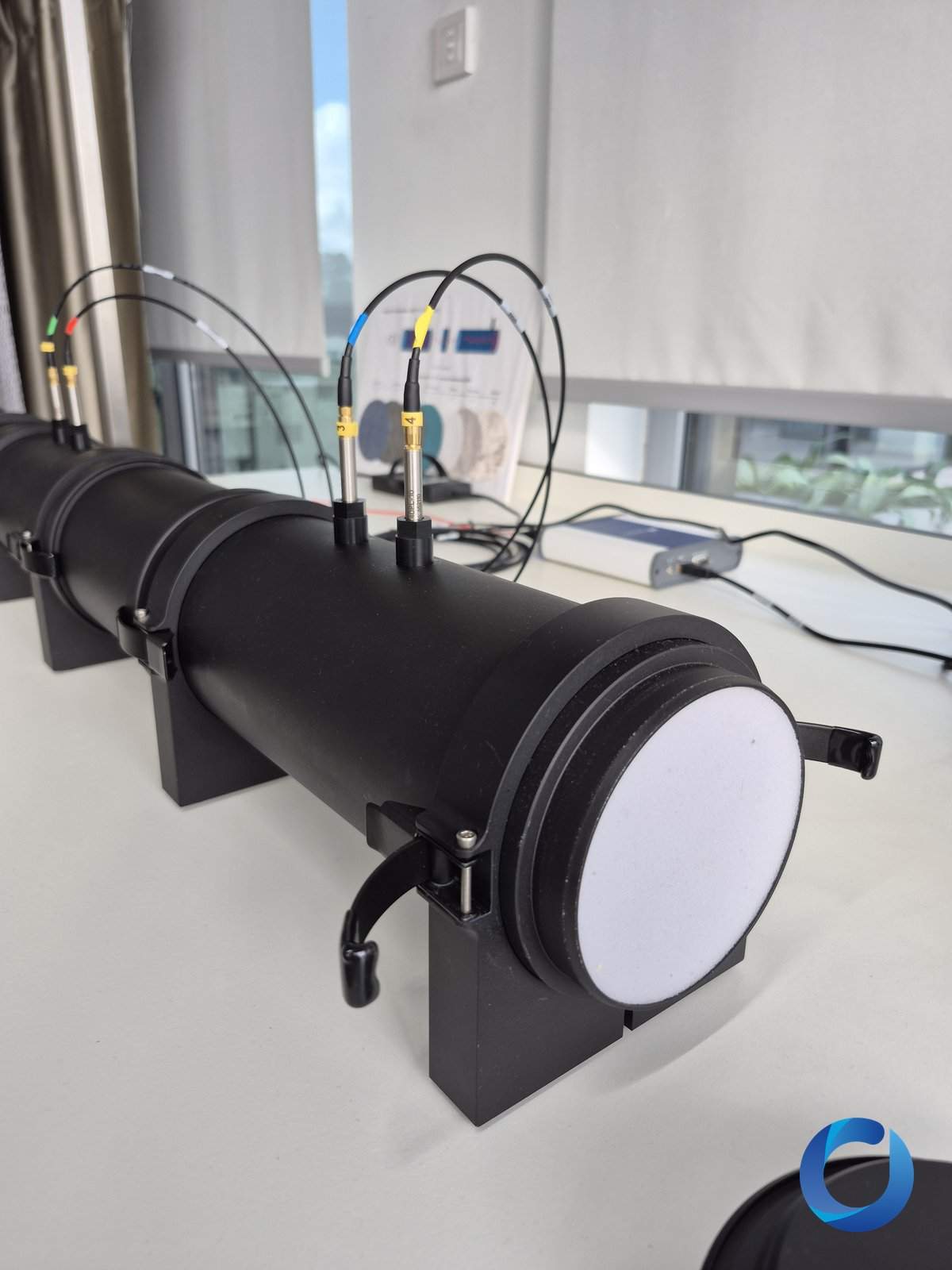
Every rating comes from real measurement: fabric samples are tested in an independent acoustic laboratory.
Sound absorption class (drapery and upholstery). This shows how well a fabric reduces echo and reverberation inside a room. It uses an international scale from Class A to Class E, where Class A absorbs the most sound and Class E the least. We rate drapery (curtains) and upholstery (sofas and chairs) separately, because they hang and sit differently and absorb sound in different ways. Most curtains and soft furnishings fall in the middle of the scale, which is usually all a comfortable home or office needs.
Why Class C is a great result for a curtain. The absorption scale was designed for every kind of building material, and the top classes are generally the territory of dedicated acoustic products such as thick mineral wool panels and perforated ceiling systems, engineered purely to absorb sound. A curtain is only a few millimetres of textile, yet a Class C drapery still absorbs roughly 60–75% of the sound energy that reaches it, close to the top of what a hanging fabric can physically achieve. Just as importantly, most rooms should not aim for maximum absorption: a space treated to studio levels sounds unnaturally “dead”. For homes, offices and restaurants, Class C drapery delivers exactly the calm, comfortable acoustics you actually want, while lighter Class D and E fabrics and sheers still play a useful supporting role in a layered scheme alongside rugs, sofas and heavier drapes.
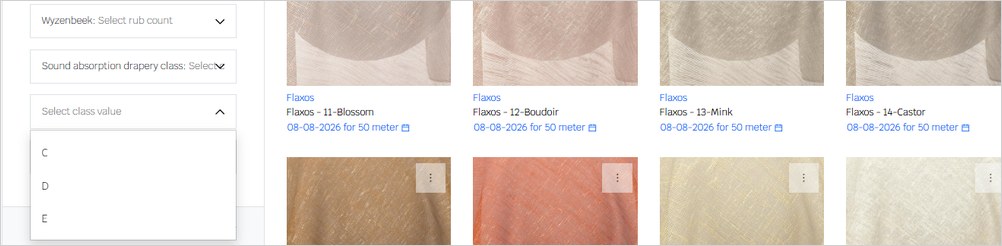
Every fabric page lets you filter by sound absorption drapery class, so you can shortlist fabrics by acoustic performance as easily as by colour.
Sound transmission class. This shows how much a fabric reduces sound travelling from one room to another. A higher number means more sound is blocked. As explained above, fabrics mainly absorb sound rather than block it, so this rating is usually modest. For true soundproofing between rooms you also need proper glazing and insulated walls.
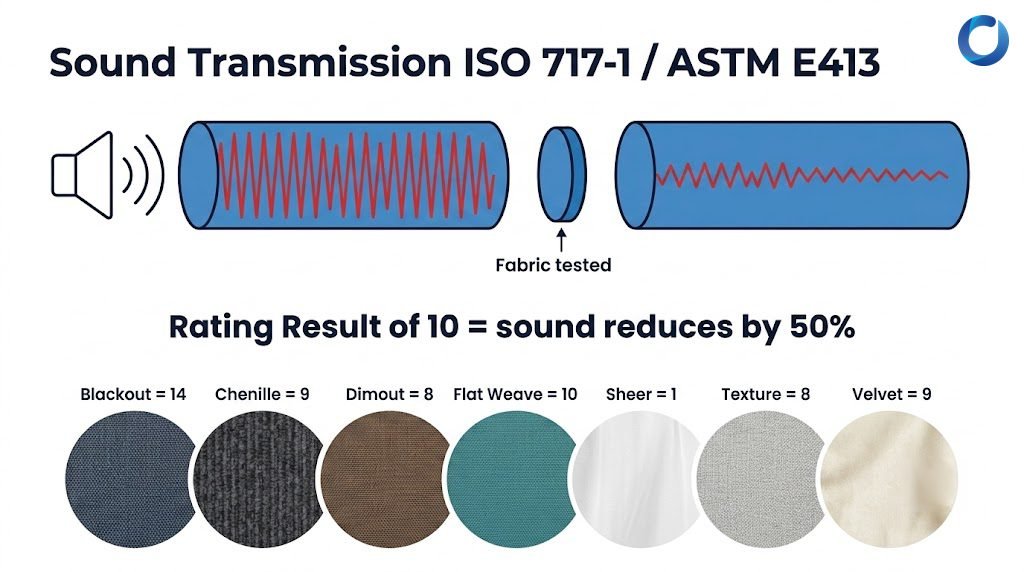
Fabrics are lab-rated for sound transmission. A higher number means more sound is blocked, from Blackout (14) down to Sheer (1).
You can filter our fabrics by any of these ratings on each product page, so it is easy to match the fabric to the acoustic result you are looking for.
→ Go deeper: how these ratings are tested in our acoustic laboratory, and what NRC and the absorption classes actually mean. How We Test & NRC Explained
FAQ: Common Myths About Noise at Home
Myth 1: "Sound absorption and soundproofing mean the same thing."
Reality
This is the most common misconception. Sound absorption reduces sound reflections within a room, making the space quieter and improving speech clarity. Soundproofing (or sound insulation) reduces the amount of sound that travels between rooms. While some dense, multi-layer fabrics can modestly reduce sound transmission, fabrics are primarily used to improve a room's internal acoustic environment rather than completely block external noise.
Myth 2: "The thicker the fabric, the better the acoustic performance."
Reality
Thickness alone does not determine acoustic performance. Fabric construction, fibre composition, density, pleating, air gaps, and installation method all influence how effectively sound is absorbed. Two fabrics of similar thickness can perform very differently.
Myth 3: "Curtains can completely block outside noise."
Reality
Curtains can reduce certain higher-frequency sounds and soften harsh external noise, but they cannot replace properly designed acoustic glazing or insulated wall systems. Their greatest benefit is reducing sound reflections inside the room, creating a calmer acoustic environment.
Myth 4: "If a room is noisy, adding more fabric will solve the problem."
Reality
Effective acoustic design is about balance. Simply adding more fabric does not guarantee better acoustics. The type of material, its placement, the amount of coverage, and the room's geometry all influence the final result. In some spaces, strategically placed acoustic treatments outperform large amounts of randomly placed soft furnishings.
🟦 Engineer's Note
Acoustic treatment should be based on the room's function and reverberation characteristics, not simply the quantity of absorptive material.
Myth 5: "A quieter room is always a better room."
Reality
Not necessarily. Every space has an ideal acoustic environment. A concert hall requires a longer reverberation time than a classroom, while a restaurant benefits from some liveliness but not excessive echo. The objective is acoustic comfort, not complete silence.
This is an important concept because many people assume "more absorption is always better."
Myth 6: "Noise level is the only thing that matters."
Reality
People often judge comfort based on speech clarity, not just loudness. Two rooms may measure the same sound level in decibels, yet one feels much noisier because excessive reverberation causes conversations to overlap and become difficult to understand.
Myth 7: "Acoustic treatment is only necessary for recording studios and theatres."
Reality
Today's acoustic challenges are increasingly found in homes, restaurants, hotels, meeting rooms, healthcare facilities, classrooms, and open-plan offices. As modern interiors incorporate more hard, reflective surfaces, acoustic comfort has become an essential part of good interior design.
Myth 8: "One acoustic product works for every situation."
Reality
Different spaces require different acoustic solutions. Heavy curtains may be effective in a ballroom, while fabric-wrapped acoustic panels are often more appropriate for meeting rooms. Upholstered furniture, rugs, ceiling treatments, and wall panels each contribute differently depending on the acoustic objectives.
Myth 9: "Acoustic fabrics are only chosen for their performance."
Reality
One of the greatest strengths of fabrics is that they combine aesthetics with functionality. Unlike many exposed acoustic products, fabrics provide designers with almost unlimited choices of colour, texture, pattern, and construction while simultaneously improving thermal, visual, and acoustic comfort.
Myth 10: "If you can't see the acoustics, they don't matter."
Reality
Good acoustics are often invisible—but their absence is immediately noticeable. Occupants may not recognise excessive reverberation or poor speech intelligibility as acoustic issues; instead, they simply describe a space as tiring, noisy, or uncomfortable. Well-designed acoustics quietly enhance the overall experience without drawing attention to themselves.
"People rarely walk into a room and compliment its acoustics. Yet they instinctively notice when conversations become tiring, echoes linger, or the space feels uncomfortably noisy. The best acoustic design is often the one that goes unnoticed because it simply makes people feel comfortable."
— Karen's Insight
→ Want the full technical detail? Explore the lab method, worked examples and complete FAQ in the technical companion: Understanding Sound Absorption in Soft Furnishings
Article Suggestion :
- Curtain Trend For Your Home In 2026
- Latest Curtain Designs 2025
- Matching European Curtains Fabrics and Sofas Perfectly
- Do Sound Absorbing Fabrics Really Work? Lab-Tested Results
- Modern European Curtain Trends for 2025
- The Art of Fabric: A Modern Guide to Selecting The Right Curtain Fabric for Your Home
- How fabric affects acoustics: the interior designer's guide to sound absorption and transmission
Looking for quality sofas with creative fabrics and easy maintenance? Find the nearest showroom at acaciasofa.co
If you are searching for the perfect curtain to express your personality at home, find our nearest boutiques at acaciacurtain.co