close
Image

Curtains Installation and Maintenance Reference Guide 2024

August 16, 2024

by Karen Chan

Dear readers, if you are exploring the various types of current curtains designs and weighing some pros and cons for installation, maintenance and cost savings either for home or commercial use, it might be worthwhile to take a look at the comparison table below. After some 20 years in the industry, these are some factors that you may wish to consider in your decision making process. 

We are not analyzing fabrics types in this article, so cost savings which may arise from various fabric use is not discussed here.  Note:  Pictures of the various designs of curtains are appended at the end of the article for reference. 
Image

Sensuous / Collection

Curtain Design


Installation requirements/ considerations


Maintenance/Sewing/Ease of use Considerations

 
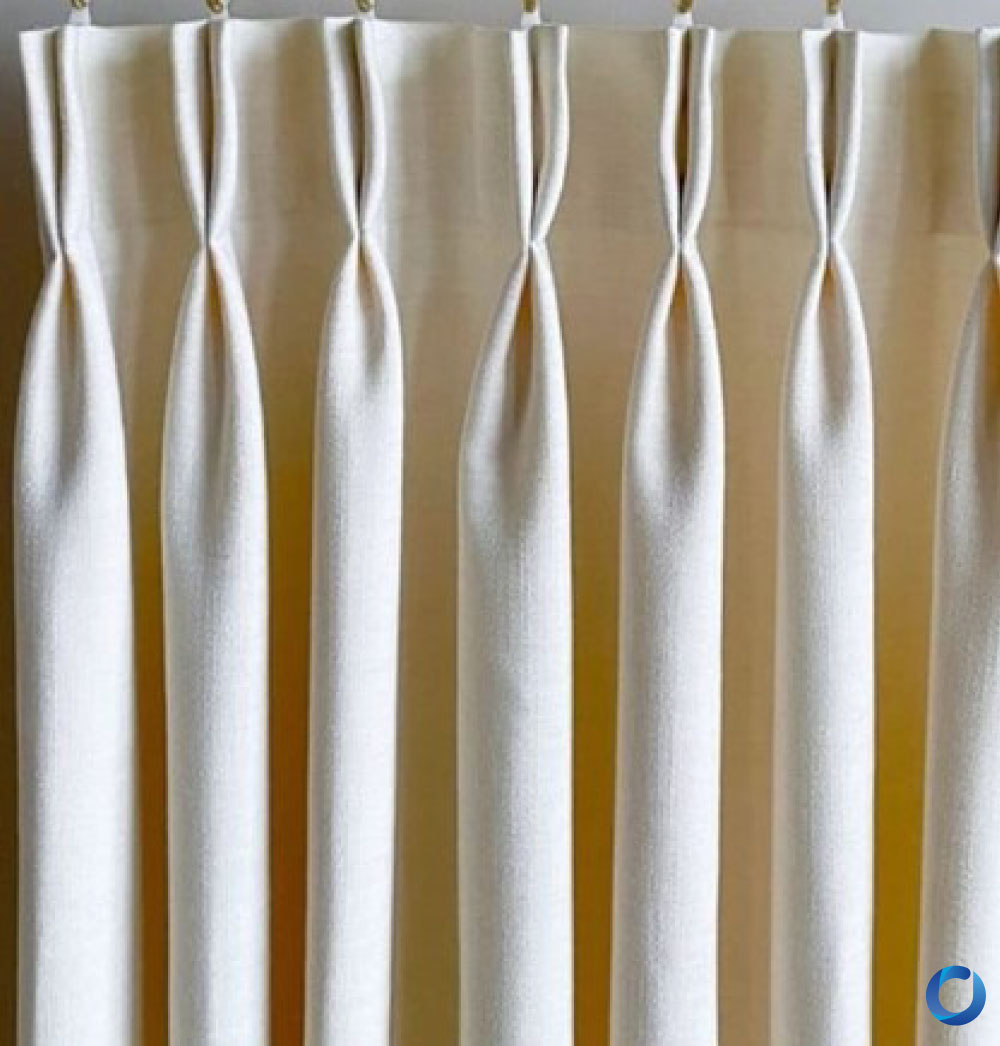
  1. French Pleat curtains on metal track


Metal track installation:

  1. On wall face; as such a spacing of 1.5-2 inches below the ceiling is normal to avoid damage to the ceiling for the drill allowance. 


  2. If you are installing direct to concrete ceiling, there is not much issue regarding the sturdiness of the hold for the track.


  3. If you are installing into a plastered ceiling, some homework on the ceiling reinforcement needs to be done properly.  Most contractors will just add wood bits or tell you to reuse the skeletal structure in the ceiling, but this is not as good as using a long plank to strengthen the entire length of the track.  A half inch plywood will do the trick to give the track a good hold.   

  4. Brackets spacing are between 2.5-3ft distance apart.


  5. In recessed pelmet

    Needs to have sufficient spacing of at least 3 inches per layer; if you have an in-recessed pelmet you will need additional allowance for installation of the track which means, a total of at least 8 inches approximately to comfortably accommodate two layers of curtains and sheers fabrics running along the tracks.   And usually, a good tip to note is to reinforce the plaster ceiling if in use, with a full-length single inch plywood that allows proper securing of the tracks to the ceiling. 

    This is particularly important for motorized installations that ensure silent, smooth and secure movement of the curtains.


Pros: 

  1. Easily sewn and fast


  2. Option to save fabric; reduce 4 legs of hook gathers to 3 legs of hook gathers; some may even do less if acceptable, but usually clients may not readily accept less pleated curtains.


  3. Easily remove hooks for cleaning


  4. Fabric generally 2x width of window/door


  5. If both a day and night curtain is used different hooks are used to avoid frictional rubs against each layer.  This has proven effective to avoid any catches between the two layers.


  6. Dirt is not trapped within the pleats as this design can be fully opened for cleaning.

Cons:

  1. Rehooking takes time and for the uninitiated, may take a long time to do and install; sometimes a slight mistake in spacing of the hooks can affect the pleating outcome/look.  Retracing the hooking process is another likely headache for some.


  2. This design is a common design and has been around for ages.


  3. Due to the quantity of hooks used, the weight of the curtains is heavier than some other designs as this type of hook is mainly made of metal.


  4. The use of 2 different types of hooks – one for the day and one for night curtains have created countless confusion for users.  One is the ceiling hook with a designated number known as 104 pleat hook and the other, the wall hook with a designated number 101 pleat hook.


Solution:

  1. Acacia Fabrics’ in-house service provider team, Circle Clean can help homeowners or commercial sites to clean curtains whilst it is hung.   It helps overcome the necessity of removing hooks to wash curtains.  In addition, the curtains are able to be dried faster as it hangs, and ready for use immediately.

 
Press Enter to type after or press Shift + Enter to type before the widget
Image

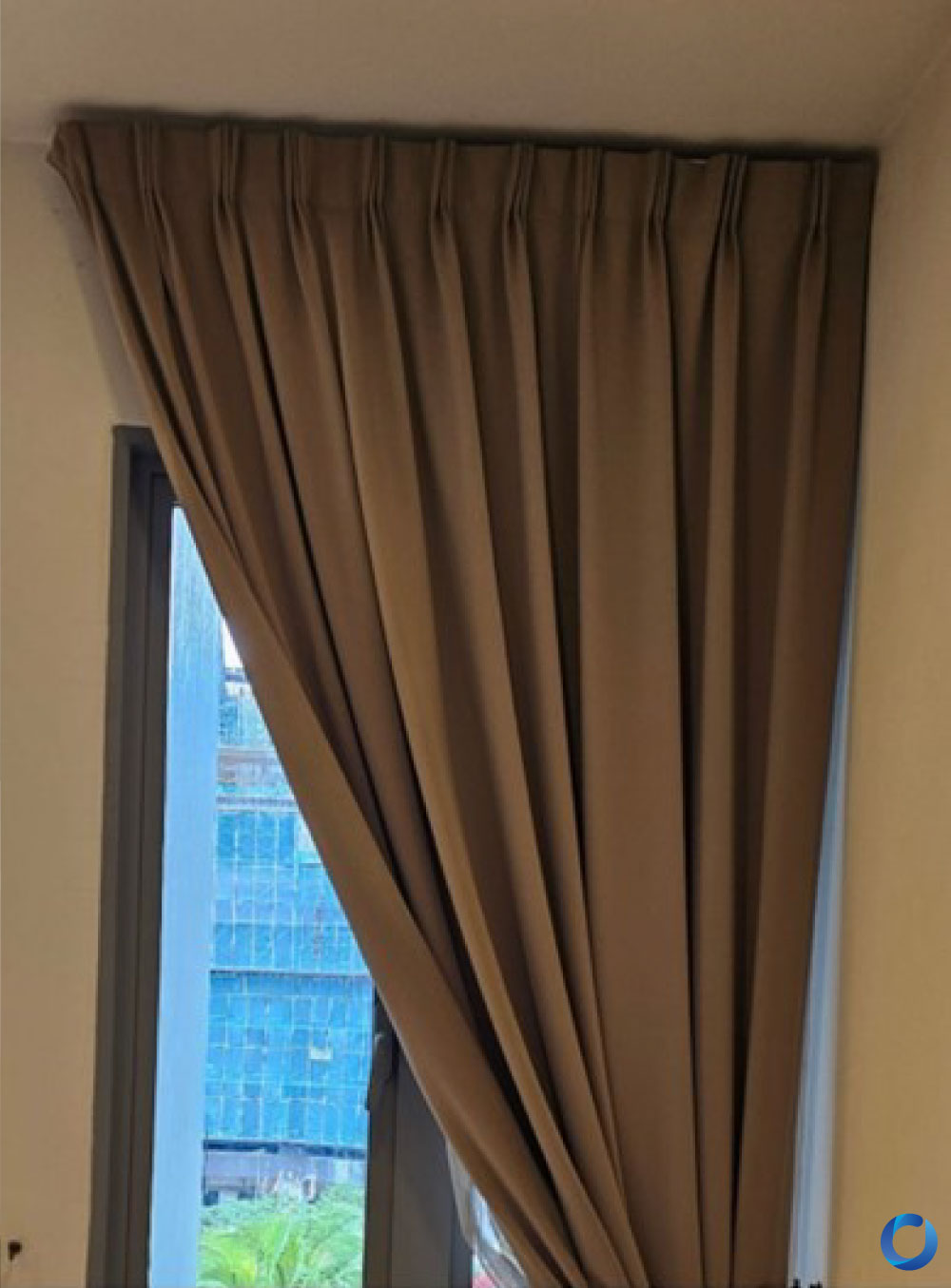
FRENCH PLEATED DIM OUT (NIGHT CURTAINS) HUNG ON A TRACK THAT WAS INSTALLED TO THE CEILING.  THE CURTAINS ARE USING WALL HOOKS THAT ARE ABLE TO COVER THE TRACKS LEAVING NO LIGHT GAPS. (HOOK 101).  ADDING A RETURN WRAP ON THE OPEN LEFT OF THE DOUBLE TRACK NEATENS AND COVERS ANY LIGHT GAPS ON THE EXPOSED SIDE.
  1. French Pleat curtains with decorative rods 


Types of Rods:  Metal, wood; usually can have various colors, designs and up to double rod options


  1.  Installation of the rods need a minimum allowance of around 4-5 inches from the ceiling if using c-cup brackets.


  2. Deeper drilling of around 2 inches should be considered to allow proper weight carriage for nails that hold the wooden or metal rod brackets.


Pros:

  1.  This design gives a decorative flair because of the use of the rods. 


  2. Instead of just a normal track, the rod may give additional balance to an otherwise bland wallscape.


  3. Due to a lower installation height, the curtains will be utilizing less fabric and hence fabric savings.  But note, however, there will be significant savings only if the curtain fabric is expensive. 


  4. The good news for the hooking part is that both the front display curtains – normally the night curtains and the back display curtains, which is normally the day curtains both utilize the same hook with the longer curve – aka single ceiling hook 104. 


  5. As mentioned, the opened pleats are easily cleaned as the dirt is not trapped within the pleats.


Cons:

  1.  As the rod utilizes rings the rings may wear off over time and regular service of the cleanliness of the rod ensures smooth running of the rings along the rod.


  2. Usually, a maximum of 3 brackets are allowed to one rod, and this is a limitation which is around 12-14ft width per rod.  Even so, the rod may also have limitation for curtains weight.  Additionally, for double layer curtains, the weight of the day and night curtains need to be considered in order to manage 


  3. This design normally is a classic design theme or for not too big windows. 


  4. Very wide windows will need to break up into several rods installations to accommodate the width.


Image

DOUBLE PLEATS (SINGAPORE PLEATS) HUNG AS A SAMPLE ON A ROD USING SINGLE PRONG CEILING HOOK

  1. Double Pleat curtains (aka Singapore Pleat) on metal tracks


Metal track installation (very similar to French Pleat requirements):

  1.  On wall face; as such a spacing of 1.5-2 inches below the ceiling is normal to avoid damage to the ceiling for the drill allowance. 

  2. In recessed pelmet

    Needs to have sufficient spacing of at least 3 inches per layer; if you have an in-recessed pelmet you will need additional allowance for installation of the track which means, a total of at least 8 inches   approximately to comfortably accommodate two layers of curtains and sheers fabrics running along the tracks.  And usually, a good tip to note is to reinforce the plaster ceiling if in use, with a full-length single inch plywood that allows proper securing of the tracks to the ceiling. 


This is particularly important for motorized installations that ensure silent, smooth and secure movement of the curtains.

Pros: 

  1. Utilizes a single prong hook to relief ease of hooking the fabric.

  2. The hand custom-made pleats are tediously made and are very neat and beautiful.

  3. The single prong hooks can be easily removed to enable cleaning.

  4. Fabric used is more compared to French Pleats.  The proportion of the fabric is around 2.2 – 2.5 times of the window width, not including the additional fabric to cover the back of the curtain header hook portion so both front and back of the curtain displays the same curtain fabric.  If done correctly, any two directional entrance may look neat from the front or the back.  An example of this is an entrance way or a glass entrance way that can have two directional traffic. 

  5. If both a day and night curtain is used different hooks are used to avoid frictional rubs against each layer.  This has proven effective to avoid any catches between the two layers.

  6. A plastic version with adjustable height has been a perfect accessory to allow height adjustments if the variation is within 1-1.5 inches.

Cons:

  1. As this design is painstakingly made pleat by pleat, the cleaning of the curtains need to be handled with care.  Gentle washing and hand wash is preferred. Any friction to the pleats are not encouraged so the pleats are displayed perfectly even after every wash.   

  2. Time to sew this design also is considerably longer and price to fabricate this is more expensive due to additional time and fabric requirements.

  3. As the sewing is only held by one single pleat, the hooking of the curtains has to be carefully inserted to the right positional pocket, and not done forcefully, otherwise it may be torn.

  4. The use of 2 different types of hooks – one for the day and one for night curtains needs to be carefully differentiated for users. 

    The longer ceiling hook with a designated number known as the 104 single hook and the other, the wall hook with a designated number 101 single hook is similar to the French Hook in terms of height reach of the curved hooks.   Both are meant to avoid brushing the day and night curtains against each other.  The height difference of the hooks are one (1) inch apart.

  5. As the pleats are fixed by sewing, sometimes the dirt is trapped inside the pleat.  If the fabric is transparent and white or light colored type, the dirt will be apparent and may be a turn-off for owners.  


Solution:

  1.  Acacia Fabrics’ in-house service provider team, Circle Clean can help homeowners or commercial sites to clean curtains whilst it is hung.  It helps overcome the necessity of removing hooks to wash curtains.  In addition, the curtains are able to be dried faster as it hangs, and ready for use immediately.

  1. Double Pleat Curtains (aka Singapore Pleat) on Rods

Installation of this curtain on Metal and wooden rods are similar to the French Pleat curtain requirements.

The pros and cons of the double pleat curtains are similar as above.

Image

Marmont / Collection

  1. Triple Pleat Curtains on metal tracks

Installation of this curtain on metal tracks.

Considerations: 

  1.  A good quality track needs to be considered as the weight of triple pleat is heavier as the height goes higher.  Track components as rollers/runners need to be sturdy.  A good quality track comes with good quality brackets that hold the track in place.  Check with your track specialist for the track that holds the correct weight calculations. 

Pros:

  1. This pleat attracts users who love to see lots of fabrics and pleats.


  2. The additional fabric volume creates a luxurious ambience.


  3. The additional fabric also deter echo and dampen noise waves.


  4. The sewing is beautiful and gives a beautiful drape.  Use of the fabric is 3.2-3.5 or up to 4.5 times of the width of window not including the closure of the header tape.


  5. Sometimes this type of of luxurious curtains are used as a decorative piece in restaurants, hotels, mansions.


Cons:

  1. The weight of the curtains need to be considered for the track or use functionality.  Ease of drawing depends on smooth tracks and rollers.


  2. Usually professional installers are required to provide proper hanging of the curtains to ensure satisfactory display and also due to the fact that the additional fabrics will be heavy.


  3. Strong hooks need to be used otherwise bent hooks can occur and curtains will not be able to hang properly.

Image

TRIPLE PLEATS (DAY CURTAINS) HUNG ON A TRACK ON FACE OF THE WALL

  1. Triple Pleat Curtains on Metal or Wooden Rods

Installation of this type of curtain will need to utilize rod diameters of 32mm – 35mm to be able to bear the weight.


  1. As per above, good to note drilled nails have to push in 2 inch deep

Pros:

  1. The effect of a voluminous drape is a different level of luxury paired with a beautiful rod.  The classic themed home needs it.


  2. The curtains can help dampen sound echo.

  3. If you need heavy weighted curtains, this triple pleated curtains can add additional volume in the size of the pleat itself.

Cons:

  1. Heavy curtains are not easy to clean, so dry cleaning is a possible option.


  2. Removal for cleaning needs to be done by a specialist team if too large and heavy.


  3. Curtains of such amount of fabric should not be washed in the washing machine.


Solution:

  1. Acacia’s Circle Clean team can be called to service and to clean the drapes.  As mentioned, the cleaned curtains can be used immediately without removal. 

Image

Innovation / Collection

  1. Eyelet curtains

Installation on a Metal and wooden Rod.

  1.  The eyelet sizes here are between 28mm-35mm – 48mm for use with rod sizes of 25mm – 32mm – 45mm.


  2. The metal and wooden rod should be installed at the right height.   Generally, the higher the height an illusion of a larger, taller room is created.


Note:  This design can only utilize rods and cannot use tracks.

Pros:

  1. The variety of eyelets in the market make this a modern and easy option.


  2. If the curtains are placed in a rod using C cup brackets, removal of the curtains are relatively easy, just need proper balance for the rod to be lifted and slip the eyelets out from the rod.  It will be more tricky if the rod is longer and may need at least 2 persons to ensure this is done safely.


  3. The installation of the curtains after cleaning is basically to rehang the eyelets in and out direction to create a wavy effect.


  4. The general proportion of the eyelet curtains to give satisfactory pleated waves is 2.5 times of the window width, not including the header overlap fabric consideration.   If this proportion is followed, the pleats are even and luxurious, straight pleats.


  5. Due to cost savings, some owners may prefer to utilize up to 1.5 times or 1.3 times of the window width,  the pleats will only be properly displayed when the curtains are drawn to the sides.  In this case, the curtains may draw close without a lot of pleats, which is almost flat.  This, therefore, is a flexible curtain that can adjust to sizes without using hooks.

Image

Melangerie / Collection

  1. Wave Pleat curtains

Installation is only on a wave pleat track and cannot be used on a rod.   Unless the particular rod has a special track underneath that supplies the hidden track in its rod frame. 


The wave pleat utilizes a tape with slotted and measured distance between each button that is used to attach the wave pleats at alternative “wave” spacing.  Some elegant tracks for wave pleats will have “hidden” tapes or strings that do not expose the runner strings.  These also negate the possibility of knotted tracks.


Currently, there are two types of wave pleat installations which is the button type that snaps onto the track runners, and another type which uses single hooks to hook onto the track runners.  The latter is presently the more expensive option from Toso Japan. 


The installation of the track can be done on the face of the wall or within a recessed pelmet. 


The challenge of the recessed pelmet is to have sufficient gap space of ideally 12-14 inches as each wave pleat takes up around 4.5 inches of space per return of a full wave and next.  Leaving a gap of around 0.5 inches between 2 layers of pleats and one inch between the recessed pelmet walls, the minimum gap allowance to install the double wave pleat curtains will then work out to a minimum of 12 inches.   This will need to be wider if fabrics such as heavy velvets are used.


There are, of course, various track strengths you can order from curtain specialists who will ensure that your project will be properly executed with the right support accessories.


Pros: 

  1. These tracks generally have lengths of around 19ft and much longer than rods.  Good tracks have excellent joiners and makes the joints almost seamless and without hiccups at the joints.

  2. New high end models even have click on stoppers at the tracks to hold the wave pleats in place so the pleats do not have a “bounce-back return” effect.  Looks like these wave pleats are getting better and more advanced.

  3. Due to the ease of joining the lengths, the wave curtains looks likely to be able to be extended for long lengths. 

  4. The modern linear lines create contemporary curves with long straight lengths that looks modern and sleek.  A word of caution, however, suitable fabrics that are soft and pliable will give a better outcome.

  5. This type of curtains look better slightly shorter and not touch the floor so the waves are allowed to hang freely and not dragged over the floor to lose the wave shape. Some fabrics may have extra stretch and users should not crucify the sewers as sometimes it is not easy to gauge the stretch from the hung fabrics.  It is common to have the curtains altered to the right lengths if this happens.


Cons:

  1.  As the curtains are usually buttoned or hooked below the track, the track exhibits an unsightly gap between the track and the start of the curtain header. 

  2. To counter this gap, it is best to install the curtain within a recessed pelmet.   Not only this blocks out most of the light gap from the top of the track, it also helps to neaten the room and the curtain as a whole.  Once again, do not forget to reinforce the pelmet.  Otherwise,a hollow and weak pelmet will exhibit loud sounds from the runners, which will be the main attraction instead. 

  3. Unusually thick fabric may have to be professionally sewn to enable the curves to be properly exhibited by the track.  Batting may do the trick and do not be afraid to experiment to get the design right.


Image

Vital / Collection

  1. Tab curtains or Back-tab Curtains

Installation is on the metal or wooden rods only.  The difference of the tab and back tab is just the top gap given to the header.  For the Tab, you will see gaps at the top, whereas for Back tab, you don’t see any gaps.


For the Tab type of curtains, the installation of the rod needs to be much higher than the top of the door frame, otherwise, the light gap from the tab will give unsightly exposure from the top of the door frame.   


If the gap between the door frame and the rod is small, it is best to go for Back tab design if you are a fan of this type of curtain.

Pros:

  1. These do not use hooks and simply attached to the top of the rods via a fixed gap or use a Velcro attachment or even buttons as a functional decoration. 

  2. The tab uses a minimum of 1.2-2.5 times of the window width fabric calculation, and its users need only to arrange the tabs as they like across the rod.

  3. This design normally looks good with cotton or linen fabrics with casual flair.

  4. This is a easy to care for curtain.  Only remember never to spin wash any curtains as the yarns are too long and may be damaged if washed with spinning motions.


Cons:

  1. Due to the fixed sewn tabs, you will need to remove the entire rod to dislodge the tab curtains. 

  2. If the tab curtains are removable by Velcro, these has to be carefully put on and arranged manually.

  3. The tab and back tab sits on the rod and hence, this design will be difficult to pull curtains across a wide window, and normally will not be the recommended design to use if curtains need to be drawn regularly.

  4. Some Velcro curtains if not washed carefully may attract thread or other debris which reduces the effectiveness of the Velcro over time.   When this happens, the curtains will need to have Velcro replacements on the curtain. 

Image

Alaska / Collection

  1. Roman Blinds

This is a type of flat curtain and if you fall in love with a roman blind, you will need to know how to manage and handle it.  There are many systems that help make the handling and maintenance less challenging.  Roman blinds look best with a reasonably good blackout lining with good fold qualities.  It is important to choose fabrics that can fold neatly in a stack.  Together with impeccable sewing skill, the roman blind is a beautiful and functional piece of art.


The roman blind has a Japanese style stack or a staggered stack.   The Japanese style type reveals the windows more so the stacks all stay at the top as part of the décor.   Less top header spacing is required. 


The raised staggered stack roman blind covers the windows more and hence, if you need to have more view of the outdoors, the staggered design needs to be installed much higher to accommodate the stacked folds.


Both roman blinds have options to have a pelmet box to give a more tailored look to the blind.  The pelmet box will normally have matching fabric to be used with the roman blind.


Roman blinds also have double layer system. The Toso® double Creaty® Roman blind allows the back layer as a sheers blind and the front as the blackout or block out piece.


Toso® is the world’s leading accessories for curtains tracks and blinds and I usually refer to this brand for a reputable and dependable accessory.

Pros:

  1. Uses the least fabric as it is flat construction and can look attractive either plain or with design.

  2. Roman blind with good looking tailored pelmets are a sight to behold. 


Cons:

  1. It is important to use a good roman blind track so it is easy to use and care for. 

  2. Sometimes, tying the roman blinds back to the system is not easy, as all the strings at the back of the blind will need to be evenly tied. 

  3. Compared to the small size of a blind against a curtain, it is not a cheap item.


Looking for quality sofas with creative fabrics and easy maintenance? Find the nearest showroom at acaciasofa.co
If you are searching for the perfect curtain to express your personality at home, find our nearest boutiques at acaciacurtain.co