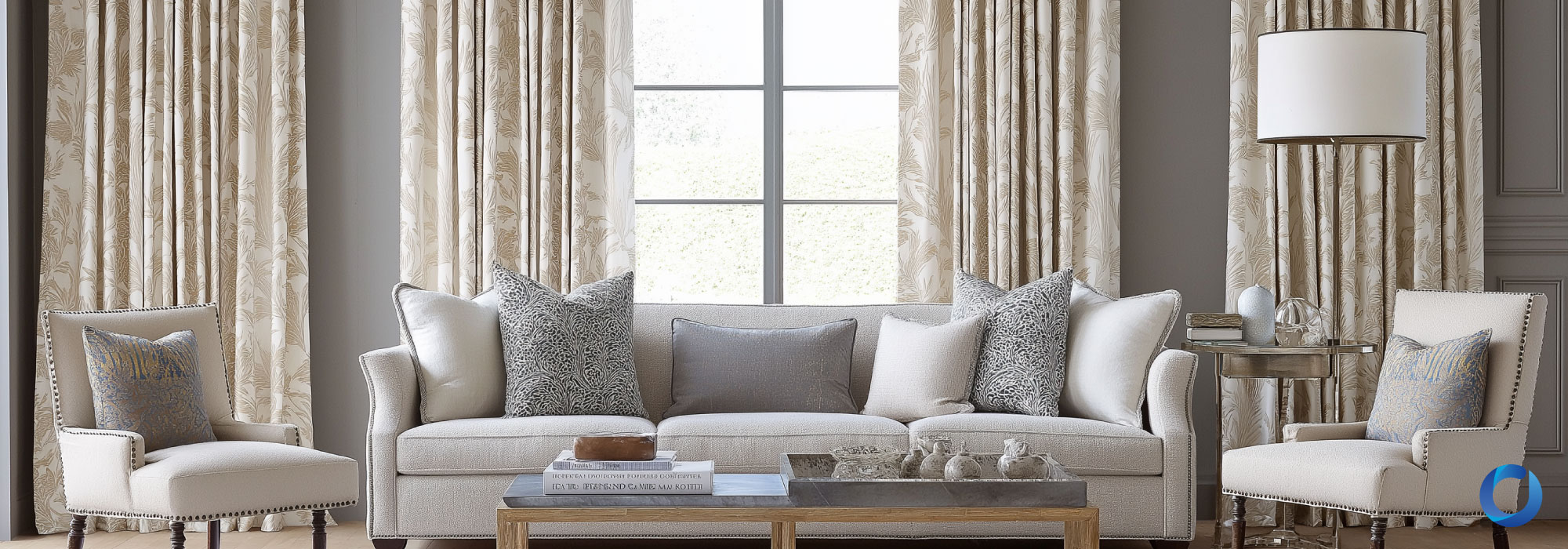
Latest European Curtain Trends for Modern Homes
February 4, 2025
by Sheryll Low
The History of European Curtains
Curtains, which are historically suggested to have unrolled from early Egyptian civilisation, continue to endure in the background of our daily living, a non-essential essential resting on the shoulders of windows. While it is not the kind of thing that occupies the forefront of mental expenditures up until relocation or refurbishing, it is committed in what we associate and understand about furniture.
That is simply a roundabout way of acknowledging that curtains are underrated, both in public perception of their utility and their uniqueness. They can do so much more outside of their recognition, of being drawn and closed under the conditions of time. If you are someone with an interest in home renovation and interior designing, this sentiment is reflected in blogs and magazines, whereby curtains may not take the centrepiece role, but exist within frame to complete the eye candy of the overall room. In the place of blank, plaster walls and a sense of lack, curtains are simple but moving additions that serve up diversity without much obstruction.
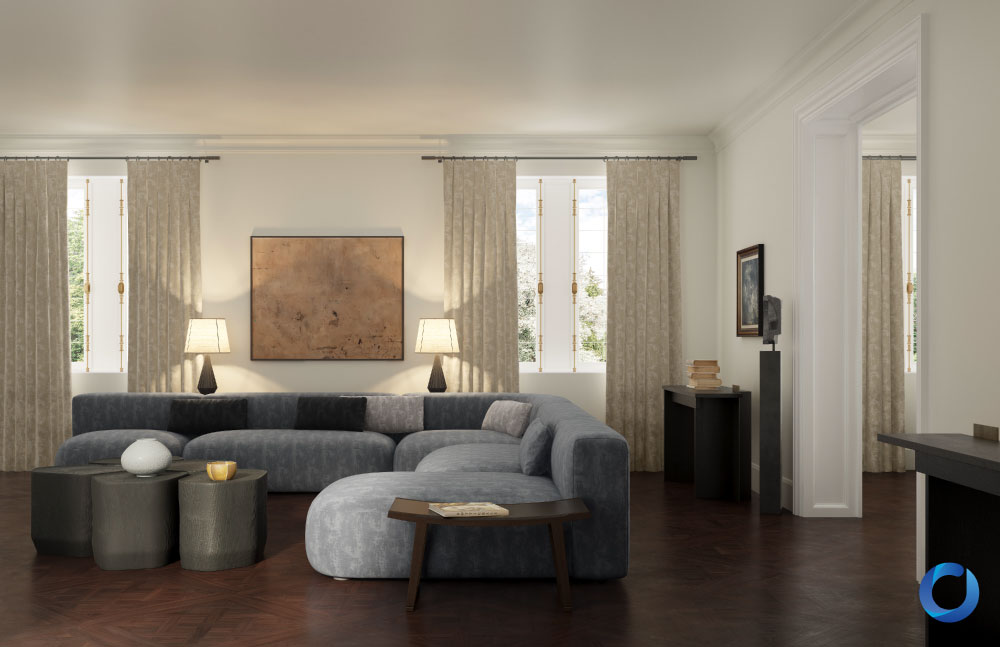
Innovation / Collection
Feel the fabrics at our beautiful showrooms
Contact us for the location of the nearest Acacia Fabrics dealer

At the idea of what could be an artistically-inclined exploit for curtains, perhaps it is then relevant to introduce the redux of European curtains marketed towards the modern home. Sensations of opulence and theatrical grandeur swarms the vision, but what defines a set of curtains to be considered ‘European’, as far as one is concerned, are established brands with such origins, and the celebration of the craftsmanship influenced by its long and vivid past. In fact, it seems almost impossible to praise the widespread appeal without mentioning its connection to the arts. Curtains have always been companions in the river of European culture, their designs pliable with the trendsetters of their times, so when we talk about ‘European curtains’, we talk about European fabrics: in the early and late Middle Ages, curtains consisted of heavy velvet, brocade and even tapestry cloth, often decorated around castles. This expanded into the Italian Renaissance period, then redressed in Rococo ornaments, fabric trades allowing curtains to become a more affordable commodity. The production of curtains, moving away from traditional block printing to achieve its intricate damask patterns, entered the new industry of synthetic fibres and greater machines.
With globalisation, the European curtains of today may be less stringent on their artistic characteristics, but are still reputed for their quality and innovation, still making rounds to stun and uphold the pride of this sundry expertise.
The trends involving European curtains vary on the basis, but more than ever now, you deserve to be a part of that little renaissance in the comforts of your home.
Trends: A Four-Way Adaptability
So, what are these trends?
Colours
Art changes, and so do our homes. The hottest trend with European curtains at the moment, is the shift in appetite for a more neutral, desaturated palette when compared to previously rich and vivid drapes. This is somewhat aligned with the general trend of adopting what appears to be minimalist and sleek in terms of design, which suffices in function and outlook over the need for excessively intricate curtains, of which would clash with the surrounding environment.
Despite this, there are still ways for European curtains to stand out without the risk of being perceived as intrusively garish, instead blending into their newfound homes with what is known as a ‘natural’ feel to their integration in modern homes.
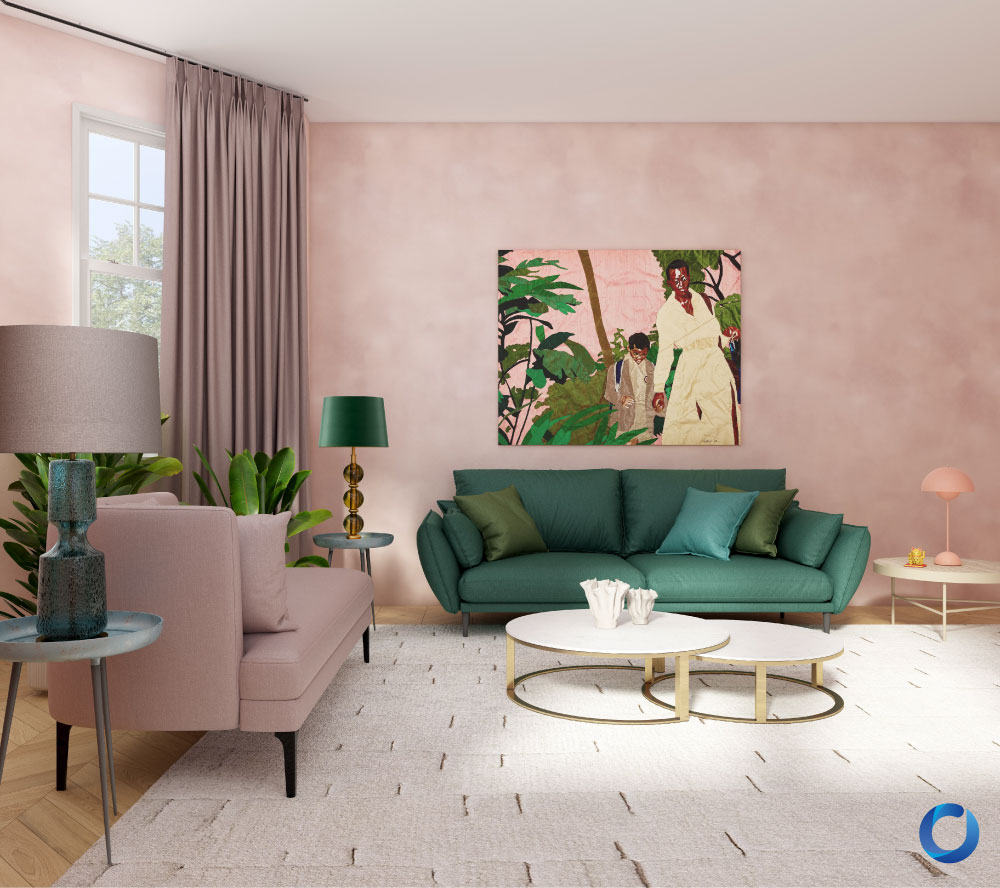
Kidglove / Collection
As such, neutral colours, referring to colours that are desaturated and altered in intensity from their eponymous hues on the spectrum, have only surged in popularity, and can be found everywhere accompanying lifestyle enthusiasts in this trend. Some of the most notable colours that now offer a large variety along the shelves are blue, green, red, and grey, with the most extreme or absolute colours being black and white. However, for those who are repelled by dullness in your comfort zones, do not worry, as desaturated colours do not automatically equate to unpleasant or murky tones. For example, in Mercis’ expansive collection of European curtains, blue and white are two of the recurring colours in the archive, where a sample of Copacabana Plain blue is presented as a whimsical, unbroken patch of sea that seemed to have been cut straight from the cloth of medieval paintings. With white, the collection features Pulse, a stunning bohemian article, where its otherwise blank and impersonal form is coated in an interesting texture resembling the shape of a willow tree.
On this tangent, colours such as red have remained more or less unchanged in their auspicious influence as it has barely lost its personality, as seen in the shades of Unico, a living vestige of histrionic elegance preserved in the canopies of royal beds. Want to really dial back your home to a private corner of a Victorian household? Iberia, also from Mercis, covers a few otherworldly tints for your curtains without contributing to the burden of poison from the genuine, period-typical paris green. New-day colours flaunt their significance through the weight of curtains, which could enhance the palette composition from our living spaces, and can be further experimented with a mix and match of different textures to refresh their range. It is thus far easier to customise and coordinate your home according to certain themes now that this variety has become widely accessible and continues to have an expanding catalogue as a result of how colours are dyed into curtains.
The colour of curtains have also been studied for their psychological benefits, in which it is believed that the viewing of colours themselves can have different effects on our mental health. Curtains with cool colours like blue and green can set a more calming, laid-back atmosphere, as an example. Additionally, with the recent development of unpredictable weather, black-out curtains have only increased in demands, insofar arriving in different colours aside from the predictably abyssal black we have come to associate with these heavy duty fabrics.
As you can see, colours certainly take the cake when it comes to curtain trends, proving an arsenal of utility alone when it comes to what you can do when sprucing up something simple.
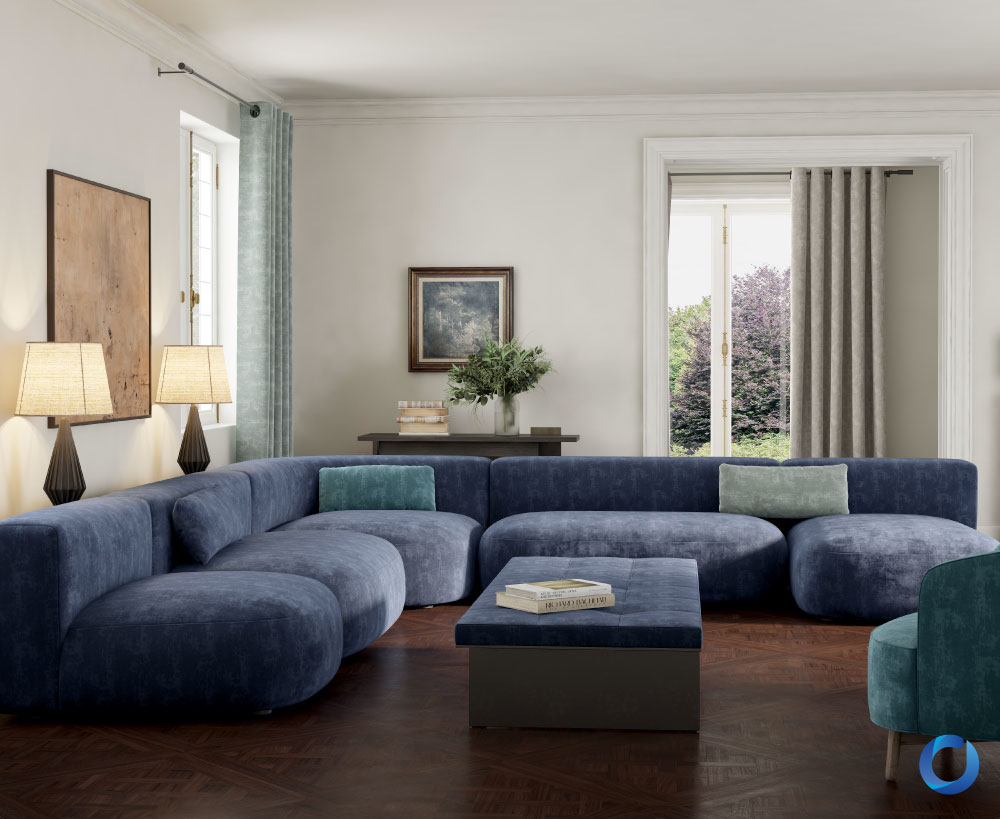
Innovation / Collection
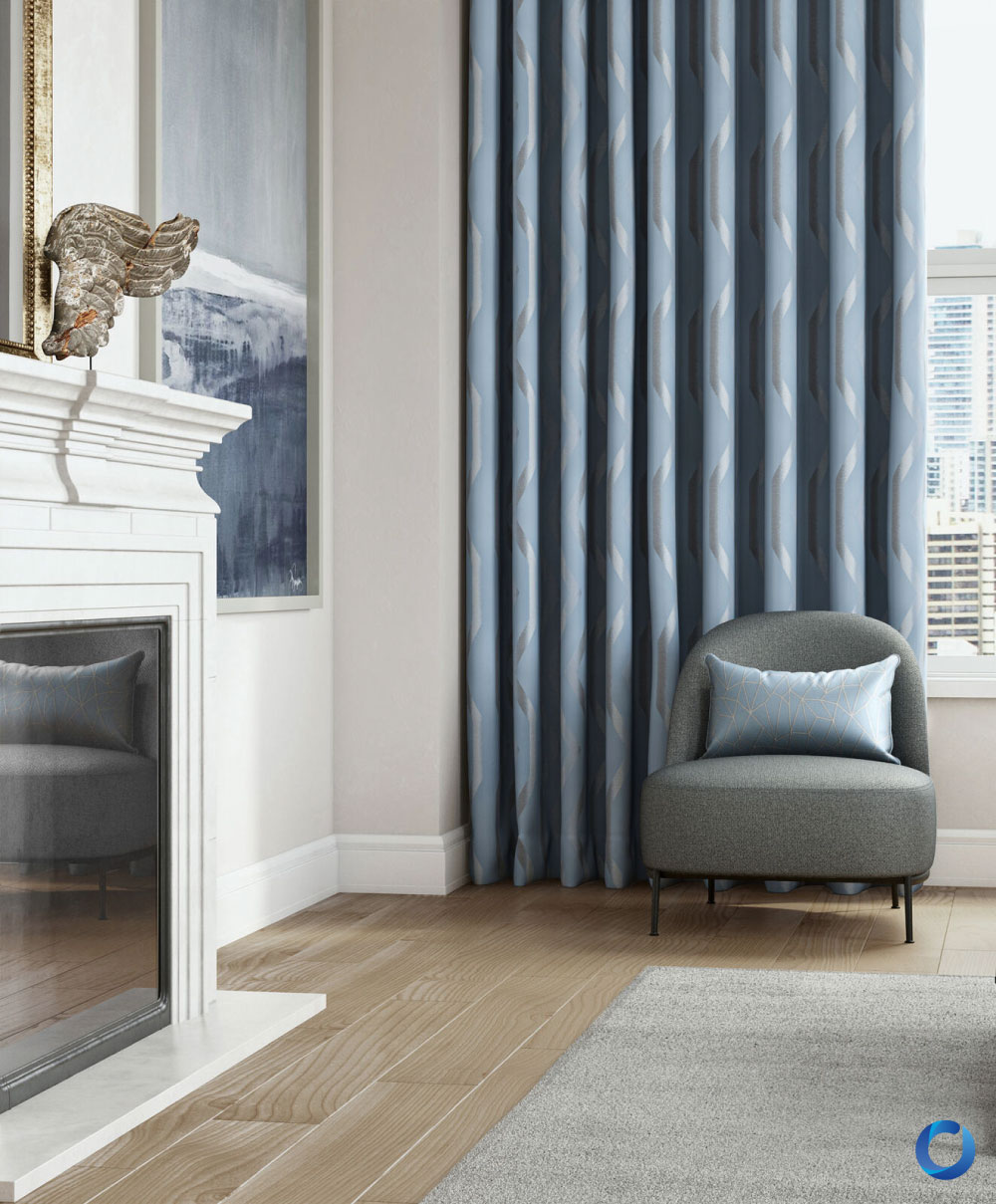
Majestic / Collection
Patterns
Retracing footsteps back to the mental imagery of European curtains, one of their other distinguishing characteristics were the elaborate patterns procured through the loom, highly garnished motifs woven into tapestry as a show of premium artisanship, and had held significant cultural and historical symbolism to the lives people lived then. These days, while some may prefer their curtains to remain smooth and plain, individuals with the experience of inheriting traditional houses from their relatives may appreciate the “grandma curtains” that already come pre-built in them. Although, patterned curtains have seen a surprising resurgence in modern homes, as such is the trend with European curtains, if only as a testimony to the appreciation for the general aesthetics echoing their origins from so long ago. And while it is difficult to gauge the exact patterns that are simply exploding with popularity at the moment, we can use the knowledge of famous and common patterns throughout the years and the kind of curtains being sold today that still embed them to get a good grasp on what prevails in these ongoing trends.
Arguably the most popular patterns are the ogee, geometric, and florals. Ogee, with some look into basic designs here and there, is a form established on what is described to be “continuous S-shaped curves”, and looks like an archaic arch that permits freedom to fill its horizontal ovals, and while it is well known on rugs and carpets, is equally commended for curtains granted its protean figure. You may see examples of this from Mercis’ curtain collection of Opera, Nancy Premium, and Lorient Premium, as the ogee is outstanding in its distinctness.
But if you want to really talk about versatility, let’s talk about geometric designs on curtains. Geometric designs are characterised by elements and objects that are repeated down the cloth, which can look incredibly abstract and even surreal. Some geometric designs tend to emphasise their three-dimensional form, like a layer of monochromatic cubes interlinked with one another, but can also be expressed in a pleasing arrangement of loose but connected patterns, as seen in Cardiff Premium.
And then we have floral prints on curtains. Florals have scarcely waned in their popularity, their decorative prominence dating all the way back to the English 1600s, one of their specific clusters of colourful floral designs then-named Jacobean, and there was indeed a Jacobean era. While not all flower prints for curtains in this upslope trend are Jacobean-inspired, if you ever found geometric shapes to simply be too tacky, the simple and quiet floral designs from the collections Lacey and Petit could be more enjoyable for a dainty home.
Of course, these are just three of the trendy patterns for European curtains, and they can vary based on personal taste, from seasonal stripes to the classical chevron, there will always be a certain je ne sais quoi surrounding curtains with eccentric patterns on them.
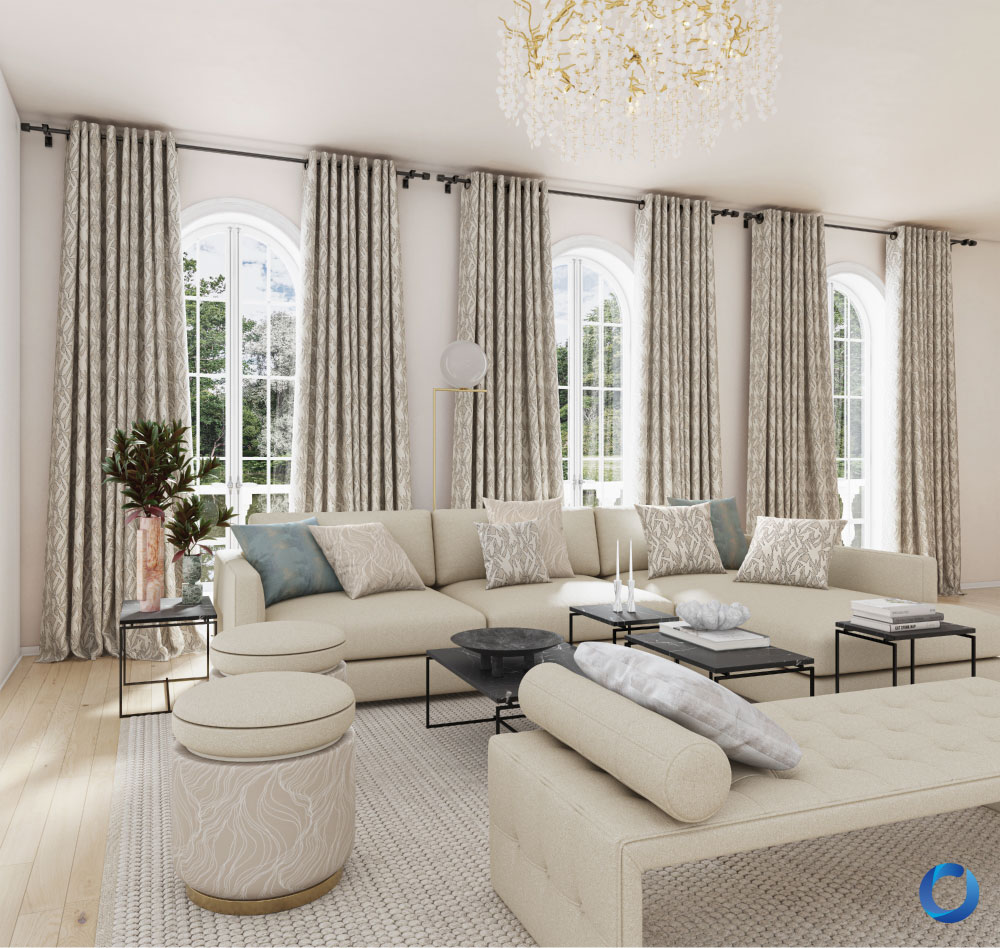
Marmont / Collection
Materials & Sustainability
Here in European fabrics, sustainability is more than a statement on a piece of paper, but a constant commitment to the environmental management systems. The implementation of sustainable fabrics, including sustainable curtains, have witnessed a surge in companies and households in order to keep up with set target goals by the European Commission, and these goals, aimed to improve energy efficiency and environmental performance, follow new product policies that ensure responsible consumption. While we cannot control all facets of production to delivered product, FibreGuard makes an active effort in reducing carbon footprint in their textile manufacturing, textile providers, and the packaging that your new set of curtains would arrive in.
A hallmark of European curtains in this trend are being made as sustainably as possible through eco-fabrics, which not only pertains to harnessing organic materials such as cotton, linen, flax, and wool, but also the versatile combination of recycled polyester and viscose. Sustainable curtains not only contribute to ongoing strategies of climate action, but tend to be extremely high-quality due to the audited process they undergo.
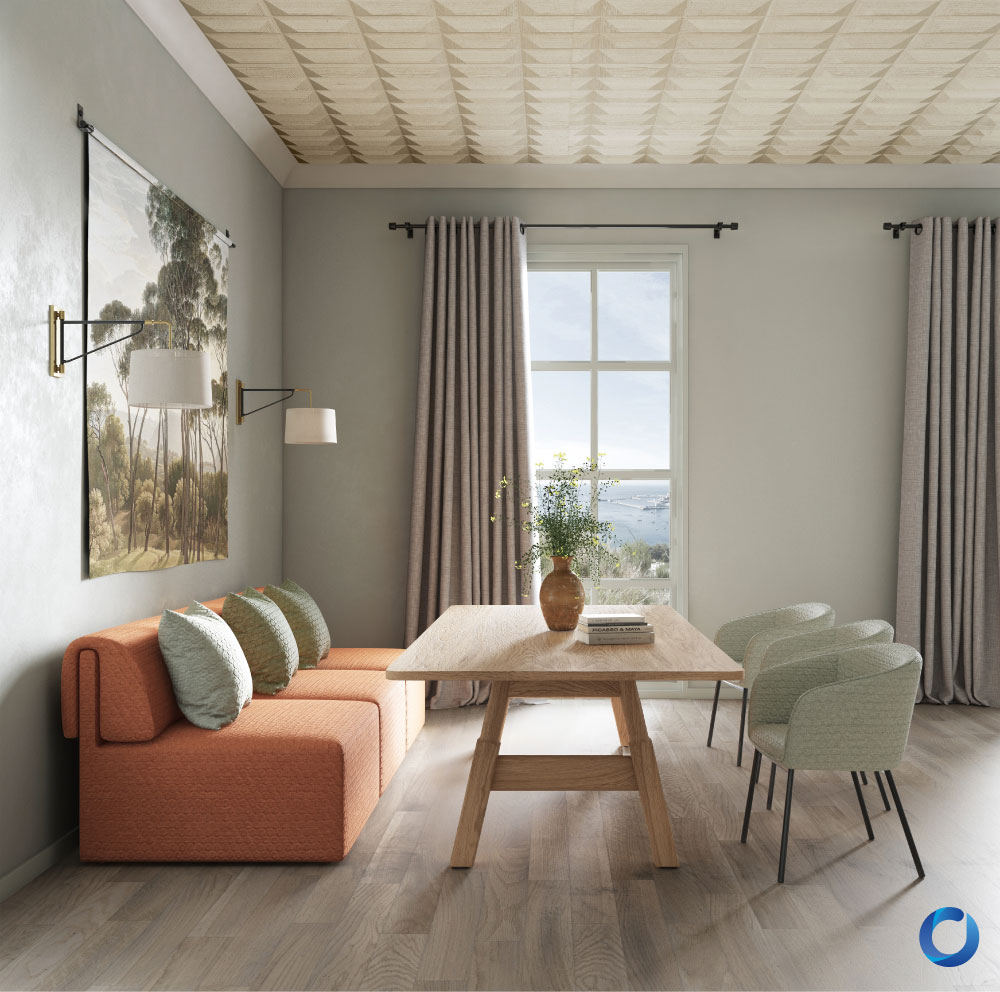
Colourquilt / Collection
Safeguards and Composition
And lastly, on the topic of sustainable curtains, European curtains are marked for their excellent quality, especially in recent trends with the kind of expectations and demands that they are able to meet and cater to. Development with curtains thus far have been looking at three separate categories: fire retardation, antimicrobial competence, and stain resistance.
Fire retardation refers to the textile’s ability to slow or stop the spread of fire, and, as one would imagine, is a highly valuable element in the comfort and safety of one’s home. Thankfully, experiments with materials that catch fire only at a much higher temperature and embedding into fabric are appropriately coined “high performance heat resistant” textiles, such as polyester, and they help to reduce the risk of flames in the new age of curtains.
This can be seen clearly with Mercis’ Aston Premium and Cordial Premium, where the curtains are made of 100% pure polyester.
Up next, as curtains are meant to frame windows from indoors, they are not immune to the accumulation of germs, which wane and fluctuate with seasonal tidings and the repeated occupation of people in living spaces. FibreGuard has thus started testing the efficacy of antimicrobial textiles in the field of slowing bacterial growth, and has seen much success with the promotion of curtains staying marginally clean even in the circumstance of reduced wash cycles.
Lastly, stain resistant curtains are ever popular for distressed parents with growing children, reducing the need for frequent washing, while maintaining a relatively tough fabric resilient against wear-and-tear.
Feel the fabrics at our beautiful showrooms
Contact us for the location of the nearest Acacia Fabrics dealer
Recap…
In summary, European curtains are renowned for their innovation and quality, and this is reflected in the trends of their curtain’s colours, patterns, sustainability, and safeguard methods. Feel free to join in the trend today, and revitalise your homely worlds with a set of interesting and aesthetic curtains.
Reference
Aura Curtains. (2024). Curtain Trends 2024, Detailed Overview. https://auracurtains.ae/blog/curtain-trends-detailed-overview/
Founti. (2023, March 3). Experimental Thermal Behavior of Fibrous Structures for High-Performance Heat Resistant Fire Curtains. https://doi.org/10.3390/en16052426
Article Suggestion :
- Latest Curtain Designs 2023 | Langsir Moden Terkini 2023
- Latest Curtain Design 2024
- Modern Curtain Designs for Contemporary Homes
- Eco-Friendly Curtain Materials: A 2024 Perspective
- 2024 Trends in Curtain Designs: What's New?
- Latest Curtain Designs 2022
- European Contemporary Curtain Designs 2024
Looking for quality sofas with creative fabrics and easy maintenance? Find the nearest showroom at acaciasofa.co
If you are searching for the perfect curtain to express your personality at home, find our nearest boutiques at acaciacurtain.co